
Omega-3 Benefits: A Complete Guide for Heart, Brain, Eyes and Skin
What omega-3 is, where the evidence is strong and where it is still weak — without overpromising, based on scientific sources.
Pharmacy shelves are full of boxes labelled "omega-3", but what are the real omega-3 benefits and how well are they proven? This guide explains in plain language what omega-3 fatty acids may do for the heart, brain, eyes and skin, where the evidence is strong and where it is weak. How to take them is covered separately: how to take omega-3: label, timing and precautions.
What is omega-3, and how do ALA, EPA and DHA differ?
Omega-3 is a group of polyunsaturated fatty acids that the body cannot make in sufficient amounts, so they must come from food. Three are discussed most: ALA, EPA and DHA.
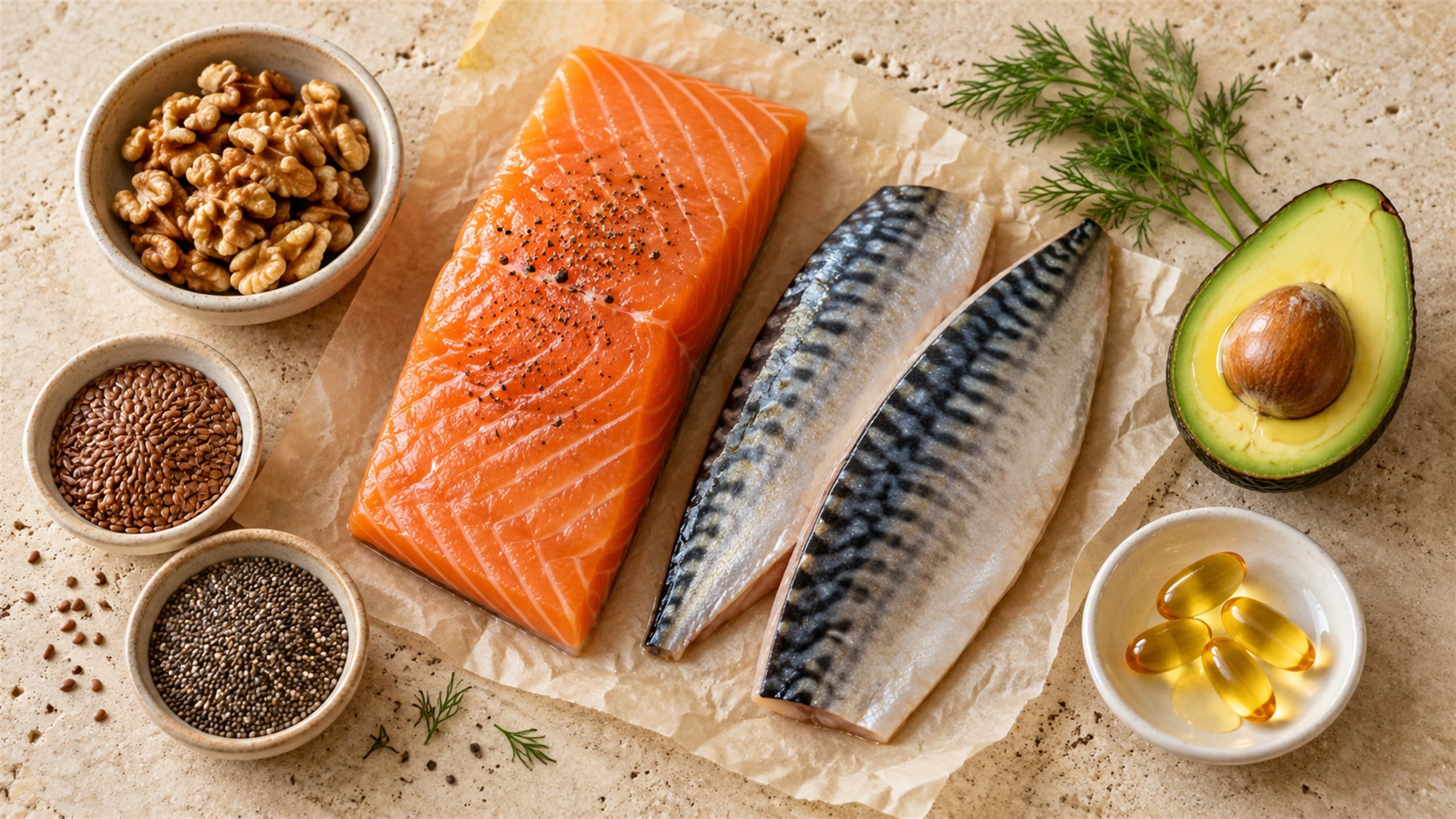
- ALA — plant sources: flaxseed, chia seeds, walnuts, soybean and canola oil.
- EPA and DHA — mainly cold-water fish and other seafood, as well as fish oil.
Most research focuses on EPA and DHA. ALA is a different type of fatty acid, so "I eat walnuts, I don't need fish" is not entirely correct: they are not the same thing.
Is omega-3 good for the heart and blood vessels?
This is the most studied area, but results are mixed. According to a 2020 review cited by the NIH's National Center for Complementary and Integrative Health (NCCIH), increasing EPA and DHA "slightly reduced" the risk of coronary events and coronary death. EPA and DHA lower triglycerides by about 15 percent, but do not affect body fat or other lipids.
For stroke the picture differs. Regularly eating fish and seafood is linked to a moderate reduction in stroke risk, but in the 2020 review, supplement capsules had "little or no effect" on strokes. So a capsule does not fully replace fish in your diet.
One more important point: in studies the benefit was more often seen in people who already have heart disease or high triglycerides. A healthy young person cannot be promised that an omega-3 capsule will "protect the heart". So the main path stays the same: proper diet, activity, and control of blood pressure and cholesterol.
Changes in the blood-vessel wall are described on our atherosclerosis page. Important: omega-3 does not replace cholesterol or blood-pressure medicines prescribed by your doctor.
What does omega-3 do for the brain and nervous system?
Omega-3 fatty acids are part of cell membranes and take part in nervous-system function, which is why they are often called "good for the brain". Clinical studies, however, call for caution:
- evidence on depression is uncertain; any effect may be too small to matter in practice;
- no clear benefit has been shown for ADHD or autism;
- it may slow cognitive decline in healthy people, but not in those already diagnosed with Alzheimer's disease.
Bottom line: it makes sense to treat omega-3 as part of your diet, but it is not a solution for memory or mood problems. If you have such complaints, see a doctor first. Insomnia, constant fatigue or declining memory often have other causes (iron or vitamin D deficiency, stress, thyroid) that need to be identified with tests.
Omega-3 for the eyes: what is the truth?
On the internet omega-3 is called "essential" for the eyes, but large studies have not fully confirmed this. For age-related macular degeneration, adding omega-3 to the AREDS2 formula gave no additional benefit. For dry eye, in the NIH-sponsored DREAM study, omega-3 supplements were no better than placebo.
This does not mean omega-3 is useless for vision: DHA is found in retinal cells, so getting enough from food is part of a balanced diet. But if your vision is getting worse, you need an eye exam, not a capsule.
Omega-3 for women, men and skin
Searches such as "omega-3 benefits for women" and "omega-3 for men" are common, but reliable sources show no sex-specific benefit: the information on the heart, vessels and triglycerides applies to both. For skin and hair, the sources used in this article contain no convincing evidence either, so we make no promises.
Pregnancy and breastfeeding are a separate topic. NHS advice is that pregnant and breastfeeding women, and those planning a pregnancy, should not eat more than two portions of oily fish a week, and should avoid fish liver oil (because of its high vitamin A) unless a doctor advises otherwise. According to NCCIH, evidence on omega-3 in pregnancy and child development is limited. Take any supplement during pregnancy only after agreeing it with your doctor.
Which foods contain omega-3?
The NHS recommends at least two portions of fish a week, one of them oily (a portion is about 140 g). The NHS does not count canned tuna as oily fish.
| Source | Type of omega-3 | Note |
|---|---|---|
| Oily fish such as salmon and mackerel | EPA, DHA | Richest natural source |
| Shellfish, oysters | EPA, DHA | Smaller amounts |
| Flaxseed, chia, walnuts | ALA | Plant source; not the same as EPA/DHA |
| Soybean and canola oil | ALA | Can be used in everyday cooking |
| Fish oil, krill oil, algal oil | EPA, DHA | As supplements; algal oil is a DHA source for vegetarians |
Fish oil and an omega-3 supplement are not the same: much of a fish oil can be other fats, and the exact amount of EPA and DHA is listed separately on the label. We explain this in how to take omega-3. Fish liver oil also contains vitamins A and D, which are harmful in excess.
If eating oily sea fish regularly is hard for you, you can discuss a supplement with a doctor or pharmacist. But a supplement does not replace a balanced diet, sleep, activity or medicines prescribed by your doctor.
How can you get more omega-3 in everyday meals?
Before moving to supplements, look at your diet. Simple steps can help you get omega-3 naturally:
- cook fish at least twice a week, once as oily fish (salmon, mackerel); baking or steaming makes the dish lighter than frying in oil;
- add a handful of walnuts or ground flaxseed to breakfast (an ALA source);
- use soybean or canola oil in salads and cold dishes;
- mix chia seeds into yogurt, porridge or a smoothie.
On a table with a lot of plov, fried food and sweets, a fish dish helps balance the diet. Before looking for omega-3 "in a supplement", assess how often fish and plant sources appear in your usual diet.
Common myths about omega-3
- "Omega-3 lowers cholesterol." According to NCCIH, EPA and DHA affect triglycerides but not other lipids. Cholesterol is something to handle together with your doctor.
- "The more, the better." For high doses (three or more capsules a day) there is not enough evidence to draw conclusions about stroke protection, and side effects may increase.
- "Omega-3, 6 and 9 give the same benefit." These are different groups of fatty acids; this article covers omega-3 only, and mixed "3-6-9" complexes are a separate topic.
- "A capsule replaces food." In some areas the evidence for eating fish is stronger than for supplements; other substances in fish may also contribute.
When to see a doctor
Talk to a doctor before starting an omega-3 supplement if:
- you take blood thinners (for example warfarin) or are prone to bleeding;
- surgery is planned;
- you are pregnant, breastfeeding or planning a pregnancy;
- you are allergic to fish or seafood;
- your tests show high cholesterol or triglycerides — treatment in that case is set by a doctor.
Call emergency services at once for crushing chest pain, sudden shortness of breath, weakness on one side of the face or body, or sudden trouble speaking. In that situation you need urgent medical help, not capsules.
How Nutva Omega-3 may help
Nutva Omega-3 is a dietary supplement (BFQ), a source of omega-3, 60 capsules per pack. One capsule contains 992 mg of omega-3 fatty acid concentrate in rTG (re-esterified triglyceride) form, including EPA 450 mg and DHA 300 mg. Mixed tocopherols 10 mg and ascorbyl palmitate 4 mg are added as antioxidants.
The product supports the normal function of the heart and blood vessels, brain and nervous system, vision and cell membranes. Manufacturer: NUTVA PHARM LLC (Uzbekistan), permit No. 1578936. The product is not a medicine.
Precautions: if you take blood thinners or have surgery planned, consult a doctor first; the product does not replace medicines prescribed by your doctor. Directions for use — follow the instructions on the pack and your doctor's advice.
Frequently asked questions
Which omega-3 benefit is best proven?
The clearest data concern triglycerides: EPA and DHA lower them by about 15 percent. The effect on heart events is small, and for stroke the effect of capsules was barely visible.
Is omega-3 good for women?
The general effect of omega-3 is similar in women and men. During pregnancy and breastfeeding, decide only together with your doctor and keep the fish limits in mind.
Do flaxseed or walnuts replace fish?
They provide ALA, whereas fish provides EPA and DHA. These are different fatty acids, so they cannot fully replace each other, but plant sources are also part of a healthy diet.
Does omega-3 help you lose weight?
No. EPA and DHA affect triglycerides but not body fat. Diet and activity decide your weight.
Are fish oil and omega-3 the same?
No. Fish oil is the source; omega-3 is the fatty acids in it. When choosing a supplement, look at the EPA and DHA amount on the label, not at "fish oil 1000 mg".
This article is for general information. It does not replace a doctor's examination or treatment. Nutva products are not medicines.