
Foods good for kidneys: the best drinks, diet tips and herbal teas
What to eat and drink for healthy kidneys, what to limit for each stone type, and why kidney tea and other herbs do not suit everyone.
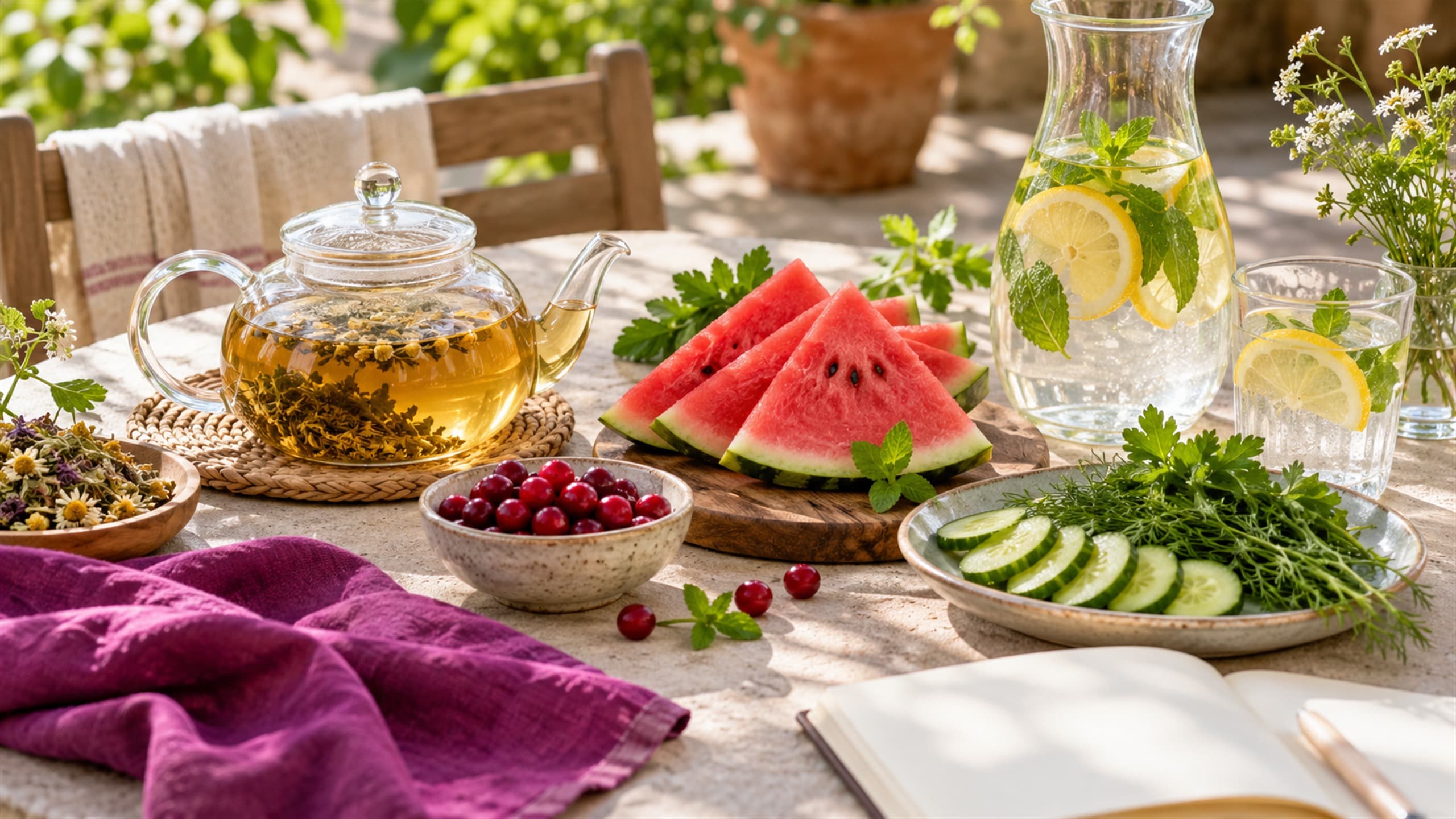
After sand or a stone has been found in your kidneys, or simply when your lower back feels heavy in the summer heat, many people ask the same question: what are the foods good for kidneys, what should you drink and which herbal teas actually help? The answer is a little more complex than a simple list: diet depends on the type of stone, your overall health and how well your kidneys work. Below, based on reliable sources, we explain what helps, what to limit and which herbs do not suit everyone.
What is the best drink for your kidneys?
The answer is simple — water. According to the NIDDK, drinking enough fluid, mainly water, is the most important step in preventing kidney stones. To stop stones coming back, the NHS advises adults to drink 2.5–3 litres of fluid a day. Urine colour is a good guide: dark urine means you are not drinking enough, while pale urine shows you are.
In Uzbekistan this deserves special attention: summers are very hot, we sweat a lot, and people who work in the fields, on building sites or in hot workshops lose even more fluid. Drink water steadily through the day rather than all at once, and more on hot days and after physical work.
An important exception: with heart or kidney failure, too much fluid can be harmful. In that case only your doctor decides how much to drink.
Lemon water, tea and other drinks: what can you drink?
The NHS suggests adding freshly squeezed lemon juice to your water. Lemons and other citrus fruits contain natural citrate — a substance widely studied in relation to kidney stones. Even so, lemon water does not replace medicines prescribed by a doctor.
The NHS advises against drinking lots of fizzy, caffeinated and alcoholic drinks. What about tea? Green and black tea count as fluid and are always on our table, but they contain caffeine. So it is better to make water, not tea, your main drink of the day. Sweet juices, lemonades and energy drinks add extra sugar, which is bad for your weight too — and being overweight raises the risk of stones (NIDDK).
About cranberry: according to the NCCIH, cranberry may slightly lower the risk of recurrent urinary tract infections in women, but the evidence is inconsistent. It is not recommended for treating an infection that has already started. If you take a blood thinner such as warfarin, talk to your doctor first.
How does diet differ by stone type?
Kidney stones are not all the same: there are calcium oxalate, calcium phosphate, uric acid and cystine stones. The NIDDK gives separate advice for each type, so if a stone has passed or been removed, ask your doctor to have it analysed.
| Stone type | Main diet advice (NIDDK) |
|---|---|
| Calcium oxalate | Plenty of water; less salt; limit animal protein; limit high-oxalate foods (nuts and peanuts, spinach, rhubarb, wheat bran); get enough calcium from food |
| Calcium phosphate | Plenty of water; less salt; limit animal protein and replace some of it with legumes; get enough calcium from food |
| Uric acid | Plenty of water; limit animal protein; losing weight is especially important if you are overweight |
| Cystine | The most important change — drinking enough fluid |
One important point: do not cut calcium sharply on your own. The NIDDK stresses that calcium does not cause calcium stones and that you should get enough of it from food. The NHS also advises speaking to your doctor before changing your diet. More about stones: our kidney stones guide.
Salt and salty food: why cut down?
The NIDDK advises people with calcium stones to reduce sodium, with adults aiming for less than 2,300 mg of sodium a day. The NHS recommends that adults eat less than 6 g of salt a day. In our cuisine, salt often comes hidden:
- bread and pastries, qurt (dried salted yoghurt balls), pickled cucumbers and tomatoes;
- sausages, qazi (horse-meat sausage) and smoked meats;
- crisps, salted nuts and pistachios, ready-made sauces and stock cubes.
Simple habits help: do not add salt before tasting, keep the salt shaker off the table, cook at home from scratch as often as you can and check the sodium content on labels (NIDDK).
Meat and protein: do you have to give up plov?
No, but portion size matters. For calcium oxalate, calcium phosphate and uric acid stones, the NIDDK recommends limiting animal protein — beef, lamb, chicken, especially organ meats such as liver and kidneys, eggs and fish — and replacing some of it with legumes such as beans, peas, chickpeas and lentils. The NHS also notes that a diet high in protein and low in fibre makes stones more likely to come back.
In practice this might look like: less meat in your plov with a bigger fresh vegetable salad on the side; legume dishes such as mung bean soup (mosh-xo'rda) or chickpea and bean soups in your weekly menu; meat in moderate portions rather than every day. The NIDDK also mentions studies showing that the DASH diet — rich in vegetables and fruit — may reduce kidney stone risk.
A list of foods good for the kidneys
- Water — your main drink; more in the heat and after physical work.
- Vegetables and fruit — watermelon, melon and cucumber provide extra fluid but do not replace water; if you have diabetes, agree the amount of sweet fruit with your doctor.
- Citrus fruit and lemon — can be added to water (NHS).
- Legumes — mung beans, chickpeas, beans, lentils: to replace part of your animal protein (NIDDK).
- Calcium sources — you need enough calcium; for calcium oxalate stones the NIDDK prefers low-oxalate plant sources. Agree the amount of dairy with your doctor.
- Fibre — vegetables and legumes; with calcium oxalate stones, wheat bran is the exception.
What to limit: extra salt and salty snacks, large amounts of meat and organ meats, sugary drinks, lots of caffeine and alcohol; with calcium oxalate stones — nuts, spinach, rhubarb and wheat bran.
Herbal teas for the kidneys: “kidney tea” and other herbs
“Herbal teas for the kidneys” is one of the most searched topics. The European Medicines Agency (EMA) has assessed several herbs on the basis of long-standing traditional use rather than clinical trials. Each one has its limits:
Orthosiphon — “kidney tea” (Java tea)
According to the EMA monograph, orthosiphon leaf is traditionally used to increase the amount of urine and flush the urinary tract as an add-on for minor urinary complaints. However, it is not used where reduced fluid intake is recommended (for example, severe heart or kidney disease), it is not recommended under 18, and it is not recommended during pregnancy and breastfeeding. If fever, painful urination, spasms or blood in the urine appear while taking it, or complaints last more than 2 weeks, see a doctor.
Field horsetail
According to the EMA, horsetail is traditionally used to increase urine output in minor urinary complaints. It is intended for adults and adolescents over 12, and if symptoms last more than a week you should see a doctor. It is not used in severe heart or kidney disease where fluids must be limited; allergic reactions and mild stomach and gut complaints have been reported.
Bearberry leaf
The EMA considers it suitable only for adult women with symptoms of mild, recurrent lower urinary tract infections. It must not be used for more than 7 days, and if symptoms last more than 4 days or get worse, you should see a doctor. Women with kidney disorders must not take it.
Corn silk and rosehip teas are also popular, but the sources we relied on give no recommendation for them — treat them as an ordinary drink, not a medicine. The bottom line: herbal teas do not suit everyone and do not replace a doctor's treatment of kidney stones or infection.
Do you need to “cleanse” your kidneys?
“Kidney cleansing” and “flushing out kidney sand at home” are among the most widespread tips online. In reality, healthy kidneys filter the blood continuously on their own and do not need any special “cleanse”. Methods such as “flushing” with large amounts of herbal tea, watermelon or beer ignore the stone's type and size and whether the urinary tract is open. If a large stone blocks the ureter, such experiments waste precious time. To understand which pain comes from the kidneys, read our article on kidney pain symptoms.
If you have chronic kidney disease or kidney failure, your diet will be quite different: a doctor or dietitian sets your fluid, salt, protein, potassium and phosphorus intake based on your test results. In that case some foods that are “good” for others, or supplements containing potassium, may be harmful.
When to see a doctor
In these situations do not rely on diet or herbal teas — see a doctor, and in a serious condition call an ambulance (103 in Uzbekistan):
- back or side pain together with fever and chills;
- blood in the urine — pink, red or brown urine;
- being unable to pee or passing very little urine;
- severe pain coming in attacks (renal colic), especially with nausea and vomiting;
- fever, painful urination, spasms or blood in the urine while taking herbal teas (EMA);
- stones keep coming back — you need a urologist's advice with stone and urine analysis;
- chronic kidney disease, heart disease, diabetes or high blood pressure — before any new diet, herb or supplement;
- pregnancy and breastfeeding — before any herbal tea or supplement.
How Nutva Nefro can help
Nutva Nefro is a biologically active dietary supplement made by NUTVA PHARM LLC (Uzbekistan). It supports the normal function of the kidneys and urinary system and fluid balance. Each capsule (500 mg, 60 capsules per pack) contains:
- Phyllanthus niruri — 50 mg;
- Orthosiphon stamineus (Java tea, “kidney tea”) — 20 mg;
- magnesium citrate — 120 mg;
- field horsetail (Equisetum arvense) — 20 mg;
- potassium citrate — 150 mg;
- madder (Rubia tinctorum) — 40 mg;
- rosemary — 20 mg;
- Aerva lanata — 20 mg;
- vitamin B6 — 20 mg.
Permit No. 1594424. The product is not a medicine; it does not replace drinking enough water, cutting down on salt or treatment prescribed by a doctor. It contains potassium, so if you have kidney failure, heart disease or high blood potassium, consult a doctor first. Large stones and severe pain are treated only by a urologist. During pregnancy and breastfeeding — only after consulting your doctor. How to take it — follow the instructions on the pack and your doctor's advice.
Frequently asked questions
How much water should I drink a day for my kidneys?
To prevent kidney stones, the NHS advises adults to drink 2.5–3 litres of fluid a day; your urine should be pale. You need more on hot days and after physical work. With heart or kidney failure, your doctor sets the amount.
Can I drink kidney tea (orthosiphon)?
The EMA recognises orthosiphon as a traditional add-on remedy for minor urinary complaints. However, it is not recommended in severe heart or kidney disease, under 18, or during pregnancy and breastfeeding. If fever, blood in the urine or pain appears, stop taking it and see a doctor.
What should I drink to cleanse my kidneys?
Healthy kidneys filter the blood themselves and do not need special “cleansing courses”. The most useful drink is plain water, with lemon juice if you like. If you have stones or pain, see a doctor instead of experimenting at home.
With kidney stones, should I limit dairy and calcium?
Not on your own. The NIDDK stresses that calcium does not cause calcium stones and that you need enough of it from food. Your doctor decides the exact amount of dairy and protein based on your stone type.
Is green tea bad for the kidneys?
Tea counts as fluid, but it contains caffeine, and the NHS advises against drinking lots of caffeinated drinks. So drink tea in moderation and make water your main drink. If you have kidney disease, follow your doctor's advice on drinks.
Is cranberry good for the kidneys?
According to the NCCIH, cranberry may slightly lower the risk of recurrent urinary tract infections in women, but the evidence is inconsistent. It does not treat an infection that has started, so see a doctor if you have signs of one. If you take blood thinners, check with your doctor first.
This article is for general information. It does not replace a doctor's examination or treatment. Nutva products are not medicines.