
What is it?
Kidney stone disease (urolithiasis) is a condition in which hard stones form in the kidneys and urinary tract from mineral salts in the urine. When urine is too concentrated or contains too much calcium, oxalate or uric acid, these substances crystallise — first into 'sand', then into stones. Most stones are made of calcium salts, mainly calcium oxalate.
A hot climate and not drinking enough markedly raise the risk, which is why the disease is especially common in Central Asia, including Uzbekistan. Small stones may pass on their own, while larger ones block the urinary tract and cause pain and inflammation. People who have had one stone are at high risk of another, so prevention really matters.
Main symptoms
- Sudden severe cramping pain in the lower back or side (renal colic)
- Pain spreading to the lower abdomen and groin
- Blood in the urine, or red or cloudy urine
- Frequent and painful urination
- Nausea and vomiting
- Fever and chills if an infection develops
Causes and risk factors
- Not drinking enough water, especially in hot weather
- A diet high in salt, meat and animal protein
- Too many oxalate-rich foods (sorrel, spinach, strong black tea)
- Sugary soft drinks
- Excess weight, diabetes, gout
- Genetics and congenital features of the urinary tract
Prevention and self-care
- 1
Drink plenty of water
Drink enough to pass at least 2–2.5 litres of urine a day, and more in hot weather. Your urine should be pale yellow.
- 2
Cut down on salt
Too much salt raises calcium in the urine. Keep salt to no more than 5 g (one teaspoon) a day.
- 3
Eat meat in moderation
Excess animal protein raises uric acid and lowers protective citrate in the urine.
- 4
Don't restrict calcium
Calcium from dairy binds oxalate in the gut and lowers the risk of stones. Have it with meals.
- 5
Add citrus fruit
Citrate from lemons and oranges helps prevent stones from forming in the urine.
- 6
Get regular check-ups
If you have had stones before, have a urine test and kidney ultrasound at least once a year.
When to see a doctor
Don't treat yourself in these cases — see a doctor:
- The pain is very severe and painkillers don't help
- Pain comes with fever and chills — urgently
- You pass no urine or very little
- You see blood in your urine
Nutva products to support your body
As a complement to a healthy lifestyle and your doctor's advice. These products are not medicines.
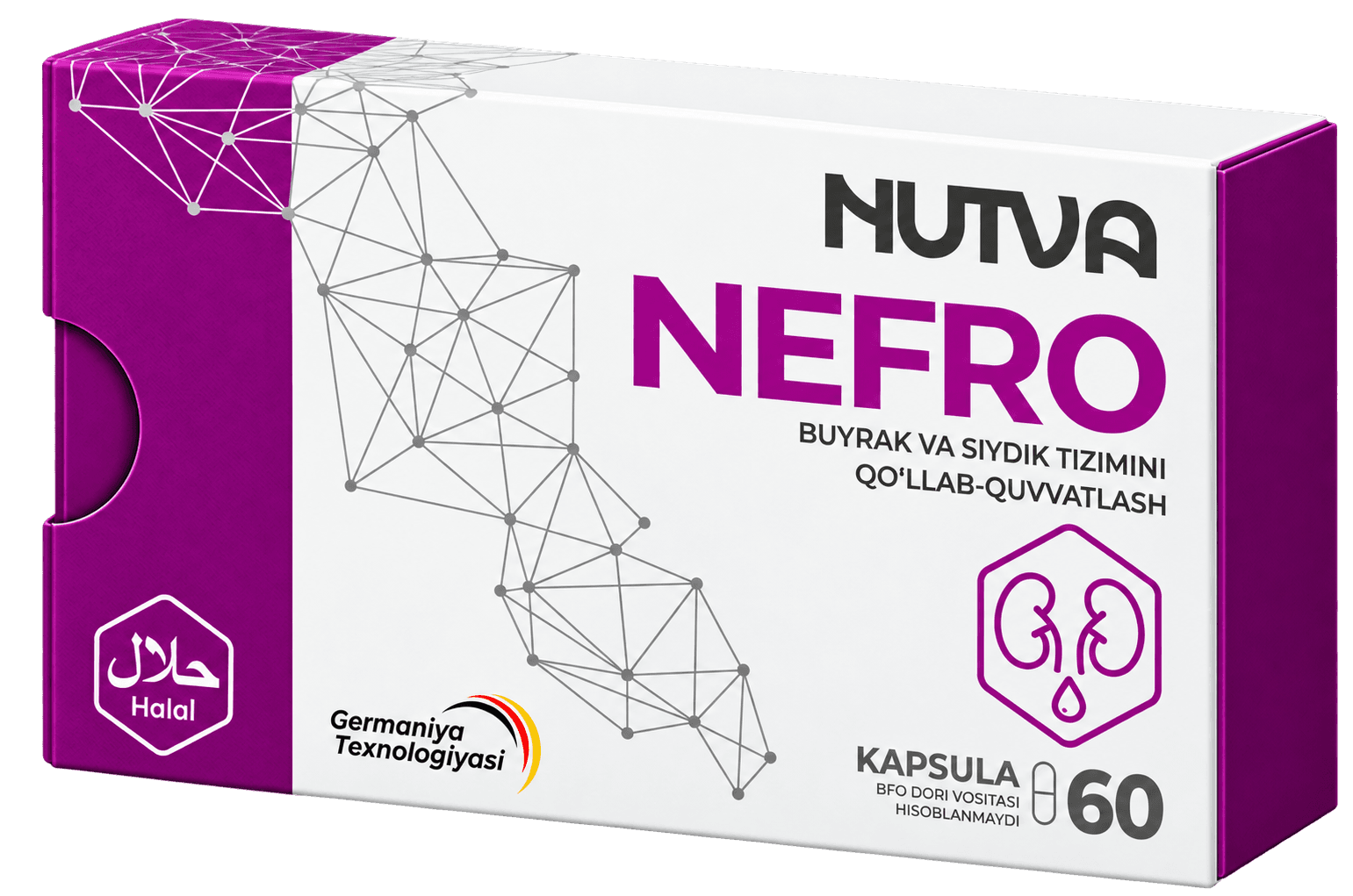
Nutva Nefro
Potassium citrate and magnesium citrate help keep urine composition balanced and support natural protection against salt crystallisation. Phyllanthus niruri, orthosiphon (Java tea) and field horsetail are traditionally used to support kidney and urinary tract function; vitamin B6 is involved in oxalate metabolism.
If you have kidney failure, heart disease or high blood potassium, talk to your doctor before taking Nutva Nefro. Large stones and severe pain must be treated by a urologist.
Which product is right for you?
Our specialists offer free advice and will help you choose a product for your situation.
Call: 1294