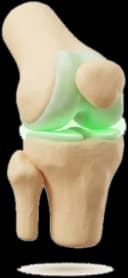
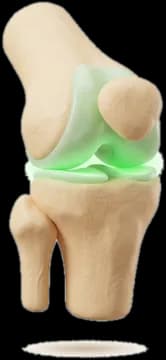
What is it?
Loss of joint mobility (joint stiffness, contracture) is a pathological condition characterized by a loss of natural freedom of movement, making it difficult to fully bend or extend a joint. Typically, this issue arises due to decreased intra-articular synovial (lubricating) fluid, cartilage degeneration, inflammatory processes, or fibrotic shortening and tightening of surrounding tendons and muscles. As a result, friction between joint surfaces increases, making everyday movements noticeably painful.
In the early stages, this condition often presents only as brief stiffness upon waking in the morning or after sitting in one position for too long. Many dismiss it as ordinary fatigue and overlook the warning signs. However, without timely intervention, joint capsule tissues can scar, cartilage erosion deepens, and the joint may progress toward complete immobility (ankylosis). Nourishing the joint with natural chondroprotectors and collagen, resolving inflammation, and boosting local blood flow can effectively restore full freedom of movement.
Main symptoms
- Morning joint stiffness: Difficulty fully straightening or flexing joints upon waking, requiring at least 30–40 minutes of gentle movement to loosen up.
- Restricted range of motion: Trouble raising the arms overhead, bending the knees fully to squat, or turning the torso backward.
- Clicking and popping sounds during movement: Audible grating noises caused by dry friction between bone surfaces due to insufficient synovial fluid.
- Initial pain when starting movement: Sharp discomfort when standing up from a chair or taking the first few steps, which eases slightly once warmed up.
- Tension and spasm in surrounding muscles: Constant involuntary tightening of periarticular muscles trying to compensate for limited joint stability.
- Increased discomfort in cold weather: Noticeable worsening of stiffness and dull aching during damp, chilly days.
Causes and risk factors
- Age-related changes and osteoarthritis: Natural thinning of the articular cartilage layer and reduced production of lubricating synovial fluid over time.
- Sedentary lifestyle (hypodynamia): Prolonged periods of sitting without movement halt normal synovial fluid circulation, causing joints to stiffen up.
- Chronic inflammatory conditions: Arthritis, bursitis, and rheumatism that cause thickening and tightening of the joint capsule.
- Past injuries and prolonged immobilization: Extended time in a cast or splint following a fracture or dislocation, leading to loss of ligament elasticity.
- Excess body weight and improper loading: Carrying extra weight compresses the knee and hip joints, accelerating premature cartilage wear.
- Salt deposits and metabolic imbalances: Disrupted metabolism leading to the accumulation of calcium or uric acid crystals inside the joint cavity.
Prevention and self-care
Daily gentle therapeutic exercise
Performing light rotational drills and stretching routines every morning to stimulate synovial fluid secretion.
Maintaining proper daily hydration
Drinking at least 1.5–2 liters of clean water daily to preserve the volume of shock-absorbing joint fluid.
Supportive footwear and good posture
Wearing comfortable, shock-absorbing orthopedic shoes to ensure even weight distribution across joints.
Strict weight management
Shedding excess pounds to relieve continuous mechanical pressure on lower-body articulations.
Protecting joints from cold and dampness
Keeping the knees and lower back warm during cold seasons to prevent vascular constriction.
Timely intake of natural restorative supplements
Supplying joint tissues with bioavailable collagen, glucosamine, and active botanical nutrients before severe stiffness sets in.
Nutva
Nutva products to support your body
As a complement to a healthy lifestyle. These products are not medicines.
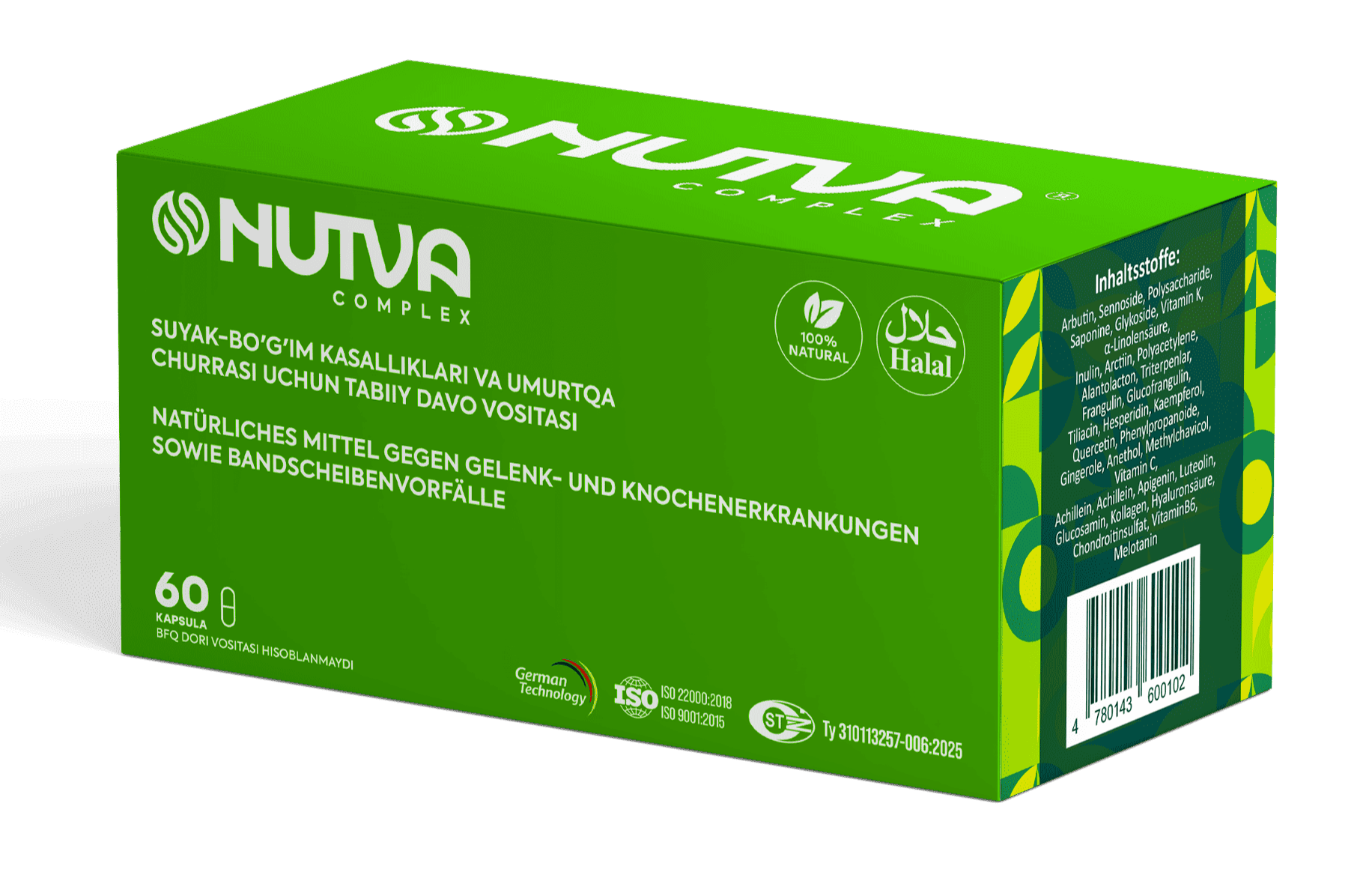
Nutva Complex (German Technology)
Natural collagen, glucosamine, and herbal extracts deeply nourish thinning cartilage tissue, normalize synovial fluid production, and restore elasticity and full freedom of movement to stiff joints.
1 280 000 760 000 UZS · per box · when buying 3
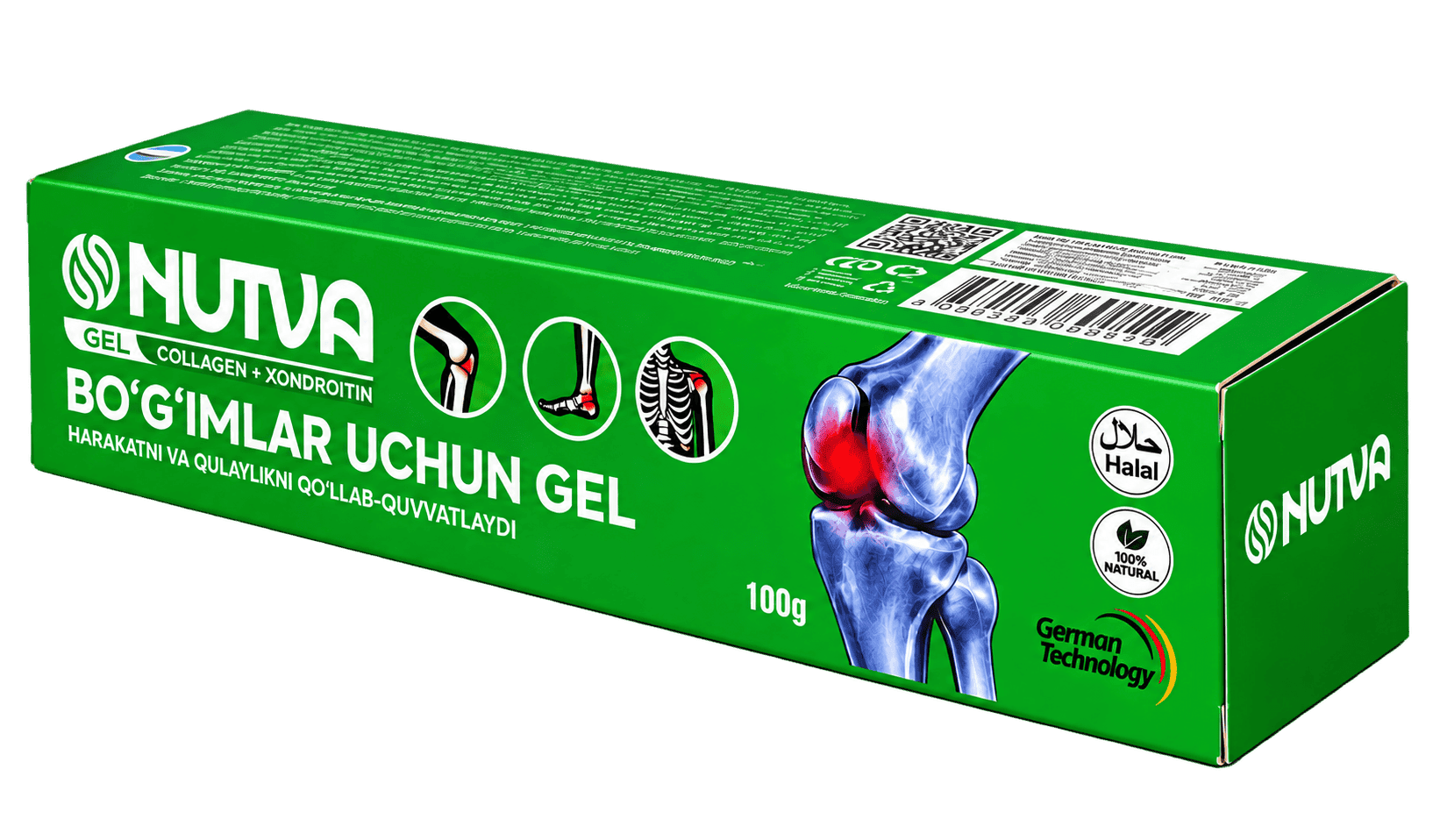
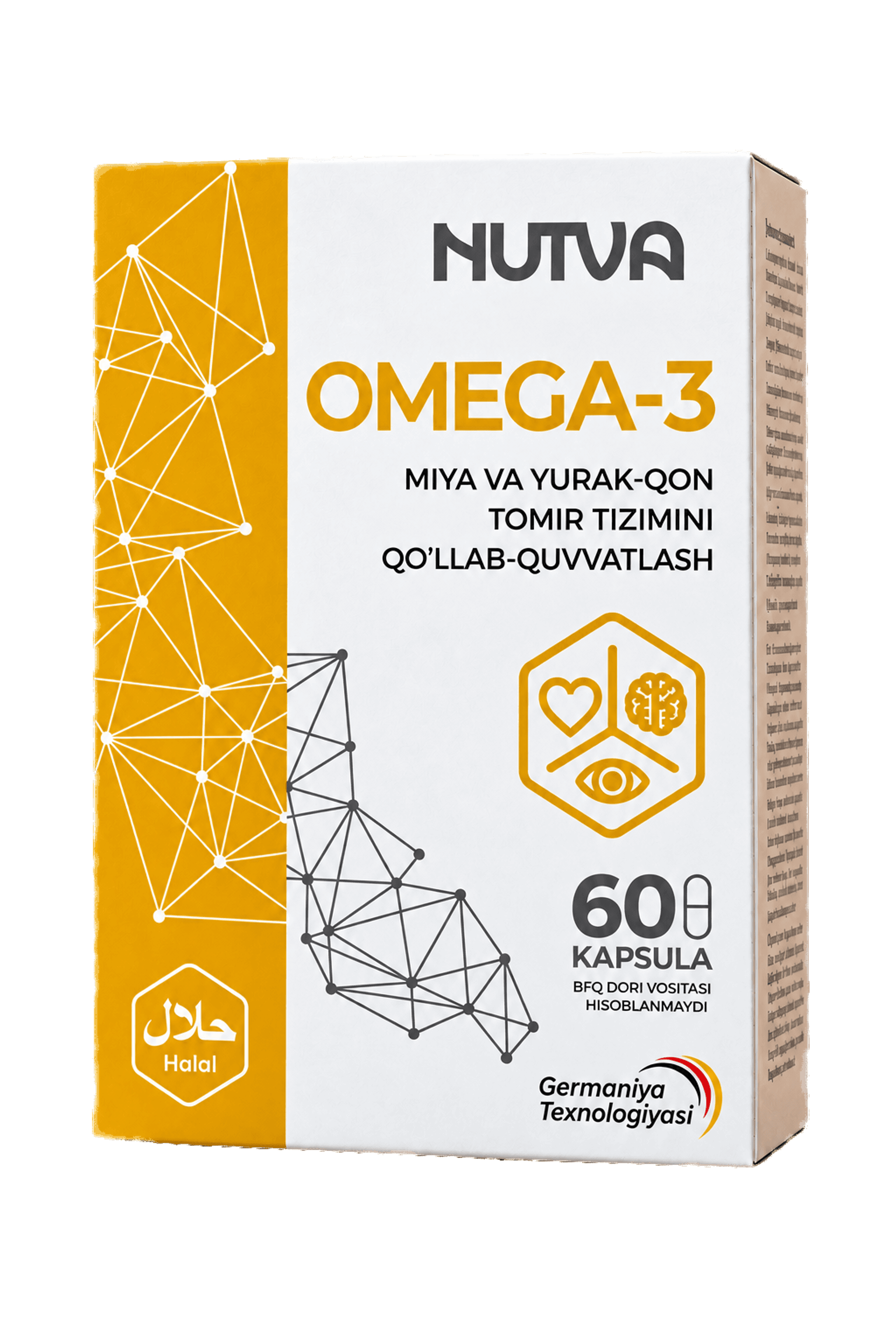
Nutva Omega-3
Clears chronic micro-inflammation in the inner joint linings, maintains blood vessel wall elasticity, and ensures a steady delivery of vital nutrients to joint tissues.
640 000 380 000 UZS · per box · when buying 3