
What is it?
Osteoarthritis is the most common joint disease. The smooth cartilage that covers the ends of the bones gradually thins and wears away. The thinner the cartilage, the more the bones rub against each other — causing inflammation, pain and stiffness around the joint.
It most often affects the knees, hips, finger joints and the spine. The disease usually starts after the age of 40–45 and progresses slowly over years. It cannot be fully cured, but weight control, the right kind of activity and timely care can significantly slow it down.
Main symptoms
- Joint pain that gets worse with movement and towards evening and eases with rest
- Stiffness in the morning or after sitting for a long time (usually up to 30 minutes)
- Cracking or grinding sounds in the joint
- Reduced mobility, difficulty climbing stairs
- Swelling around the joint, more pain when the weather changes
- In advanced stages, a change in the shape of the joint
Causes and risk factors
- Age: after 45 cartilage loses much of its ability to repair itself
- Excess weight — multiplies the load on the knees and hips
- Previous injuries, fractures and joint surgery
- Heavy physical work and repetitive movements
- A sedentary lifestyle and weak muscles
- Genetics; menopause in women
Prevention and self-care
- 1
Keep a healthy weight
Every extra kilogram adds about 3–4 kg of load to the knee when you walk. Losing even 5–10% of body weight noticeably reduces pain.
- 2
Move every day
Walking, swimming and cycling are gentle on the joints and improve cartilage nutrition — cartilage takes up nutrients from joint fluid during movement.
- 3
Strengthen your muscles
Strong thigh and calf muscles absorb shock before it reaches the knee. Exercise within a pain-free range of motion.
- 4
Don't overload your joints
Avoid lifting heavy loads and squatting for long periods; wear comfortable shoes with cushioned soles.
- 5
Eat well
Eat plenty of fish, greens, vegetables and fruit; cut down on sugar, fried and very salty food.
- 6
Don't delay care
See a doctor when pain and stiffness first appear, and start supporting your joints early.
When to see a doctor
Don't treat yourself in these cases — see a doctor:
- A joint suddenly becomes swollen, red and hot
- The pain continues at night or does not ease with rest
- You cannot put weight on a joint after an injury
- Several joints hurt along with fever and weakness
Nutva products to support your body
As a complement to a healthy lifestyle and your doctor's advice. These products are not medicines.
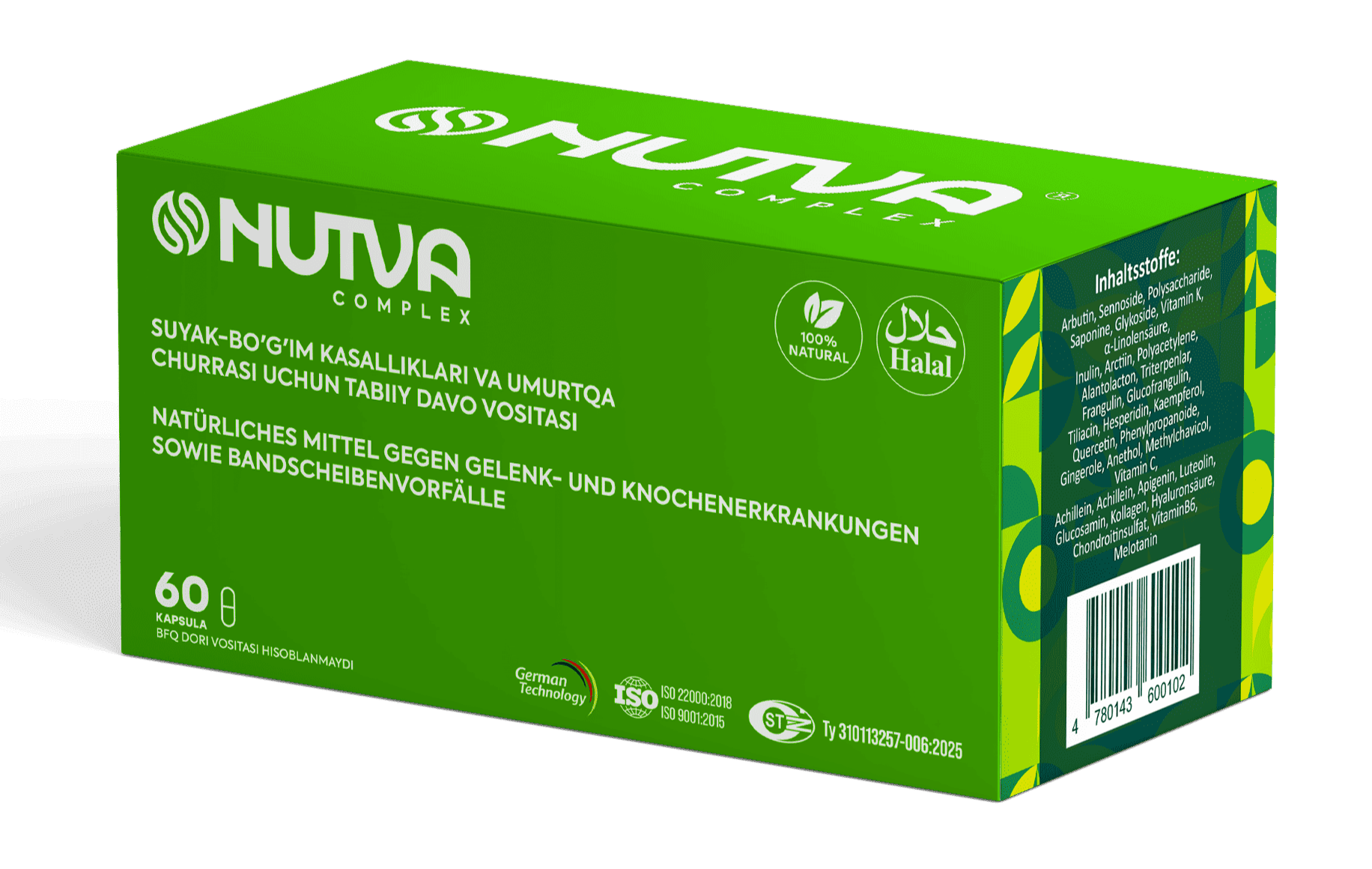
Nutva Complex (German Technology)
Glucosamine, chondroitin, collagen and hyaluronic acid are natural building blocks of cartilage and joint fluid. Boswellia, ginger and flaxseed support the joints' natural anti-inflammatory defences. A 3–6 month course is recommended.
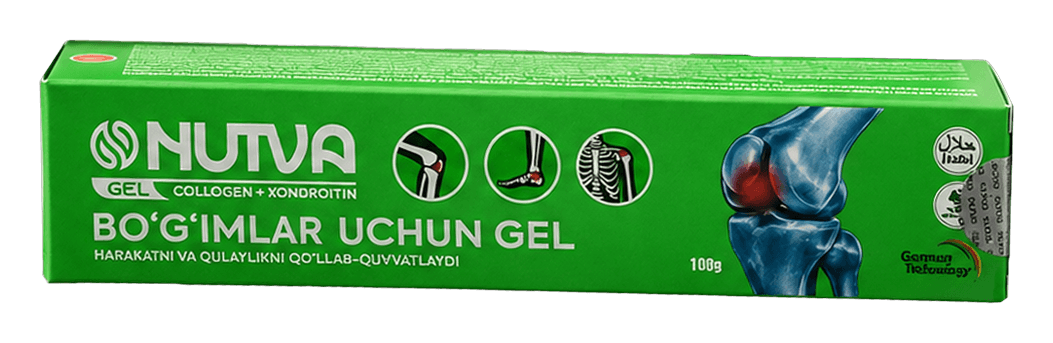
Nutva Gel
Applied directly to the painful joint: menthol cools, capsaicin and clove oil warm and locally relieve pain and stiffness, while arnica and comfrey extracts help reduce swelling.

Nutva Omega-3
Omega-3 fatty acids support the body's natural balance of inflammatory processes and complement a complete joint-care routine.
Which product is right for you?
Our specialists offer free advice and will help you choose a product for your situation.
Call: 1294