
What is it?
Osteochondrosis (degenerative disc disease) is wear-and-tear of the discs between the vertebrae. The discs are the spine's shock absorbers: they cushion impact when you walk, jump or lift. Over the years they lose water and elasticity, become thinner and may crack, which can later lead to a bulging or herniated disc.
It most often affects the lower back and the neck. When a disc loses height, the nerve roots that exit between the vertebrae can become pinched — the pain then radiates to an arm or leg and numbness appears. Sitting all day, poor posture and long hours at a computer are making this problem more common at a younger age.
Main symptoms
- Constant or recurring pain in the lower back or neck
- Pain radiating to the arm, shoulder, buttock or leg
- Numbness or tingling in the arms or legs
- Morning stiffness, difficulty bending and turning
- With neck involvement — headaches and dizziness
- Pain that gets worse after sitting or standing for a long time
Causes and risk factors
- Desk work and staying in one position for hours
- Poor posture, looking down at a phone or computer
- Lifting heavy objects, especially while bending
- Excess weight and weak back and core muscles
- Spinal injuries, flat feet
- Age, genetics and smoking (it impairs disc nutrition)
Prevention and self-care
- 1
Take a break every 40–60 minutes
Stand up, walk a little and gently stretch your neck and shoulders.
- 2
Mind your posture
Keep the screen at eye level, your lower back against the chair and your feet on the floor. Raise your phone to eye level.
- 3
Build a strong muscle corset
Regular exercises for the back, abdomen and neck support the spine. Swimming is especially helpful.
- 4
Lift correctly
Keep your back straight, bend your knees, hold the load close to your body and split the weight between both hands.
- 5
Sleep well
A medium-firm mattress and a low pillow keep the spine in its natural position.
- 6
Watch your weight and quit smoking
Both directly affect the load on the discs and their blood supply.
When to see a doctor
Don't treat yourself in these cases — see a doctor:
- Pain comes with weakness in a leg or arm
- Loss of bladder or bowel control, or numbness in the groin area — urgently
- Pain started after an injury or has not improved for more than 2–3 weeks
- Pain comes with fever or unexplained weight loss
Nutva products to support your body
As a complement to a healthy lifestyle and your doctor's advice. These products are not medicines.
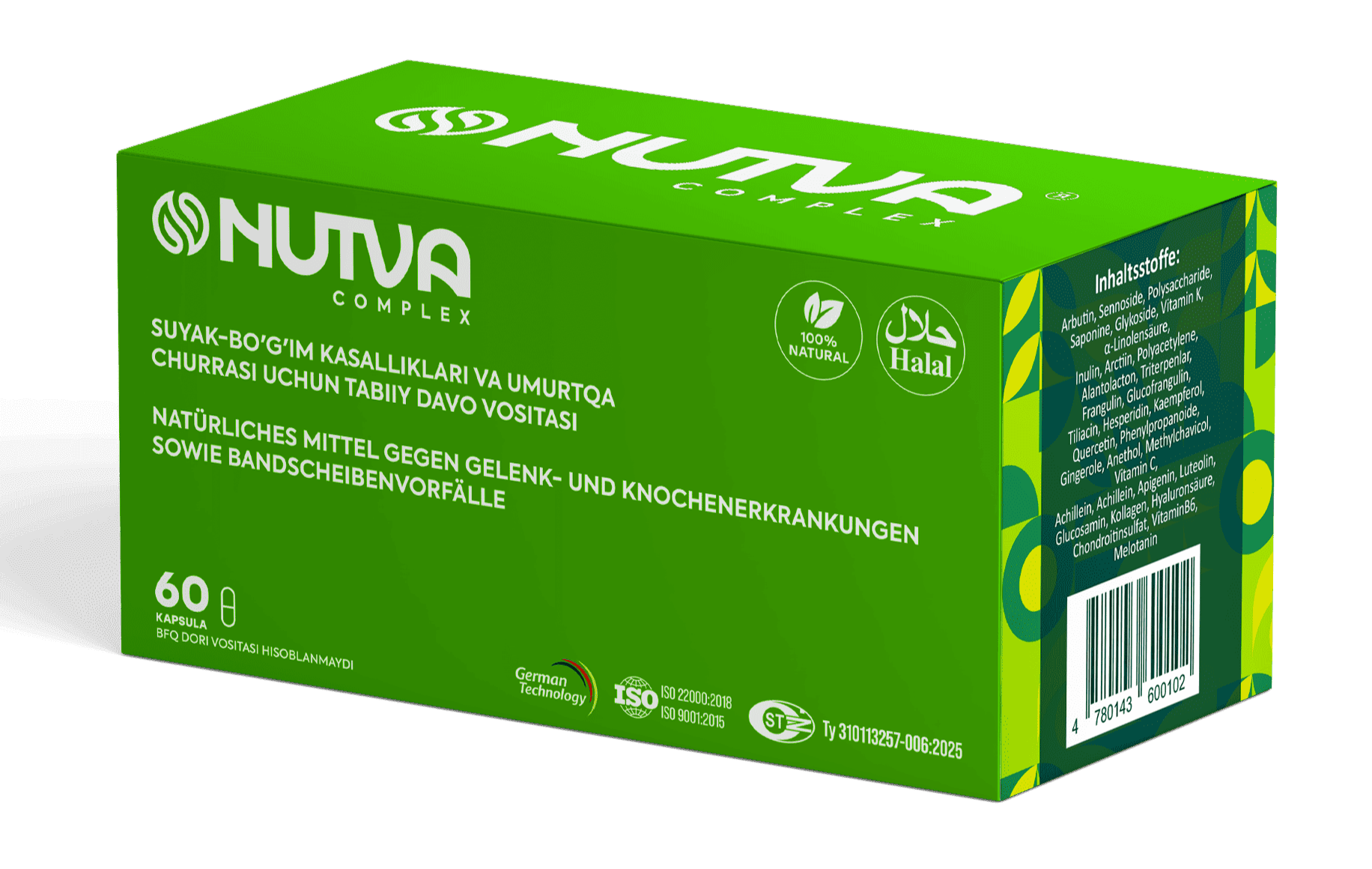
Nutva Complex (German Technology)
Collagen, glucosamine, chondroitin and hyaluronic acid support the structure of connective tissue and cartilage. Its blend of medicinal herbs (boswellia, elecampane, marshmallow root) is traditionally used for back and joint discomfort.
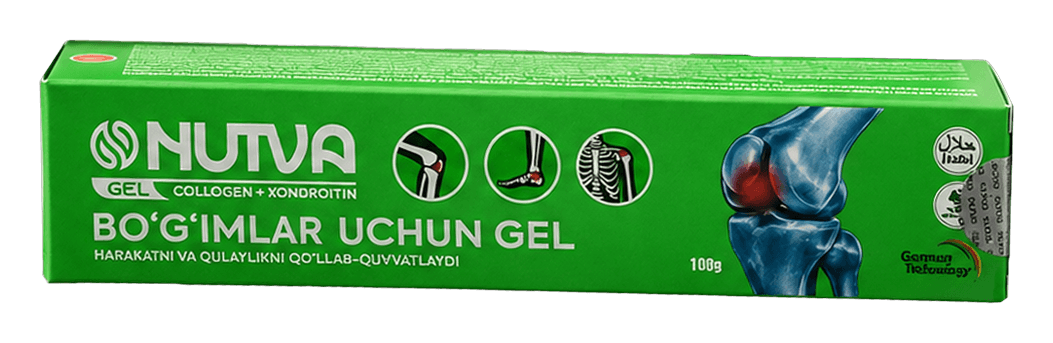
Nutva Gel
Massaged into the lower back or neck, it relaxes tight muscles: warming and cooling ingredients temporarily ease pain and stiffness.
Which product is right for you?
Our specialists offer free advice and will help you choose a product for your situation.
Call: 1294