
What is it?
Vitamins and minerals are needed in small amounts, yet without them normal energy metabolism, immune function, blood formation and the health of skin, hair and the nervous system are impossible. The body cannot make most of them itself, so they must come from food. Deficiency develops when daily needs are not met by the diet. Many people notice this only gradually.
It usually builds up slowly and without clear signs: at first there may be ordinary tiredness, feeling cold, dry skin or frequent colds. In winter and early spring fresh produce is scarcer, and some vitamins (such as D) are made less because of limited sunlight. A monotonous diet, strict dieting and frequent ready meals raise the risk further. Small changes to daily meals help.
Main symptoms
- Weakness and fatigue: energy is low through the day and rest does not bring a feeling of freshness.
- Frequent colds: infections come back often and drag on.
- Skin, hair and nail changes: dry skin, hair shedding and brittle nails.
- Cracks at the corners of the mouth and gum problems: can appear when certain vitamins run low.
- Focus and mood: concentration is harder, and irritability and poor sleep are possible.
- Muscle and bone discomfort: cramps and a feeling of aching in joints and bones can occur.
Causes and risk factors
- A monotonous diet: too few vegetables, fruit, legumes, fish and dairy means needs are not covered.
- Strict diets: a sharp cut in calories or dropping whole food groups leads to shortages.
- Too little sunlight: long hours indoors and the winter months lower vitamin D.
- Poor absorption: gastritis, bowel disease and gut imbalance reduce how well vitamins are absorbed.
- Higher needs: pregnancy, breastfeeding, adolescence, intense sport and the period after illness.
- Alcohol, smoking and some medicines: they affect vitamin metabolism and increase the use of some of them.
Prevention and self-care
Eat a varied diet every day
Fill your plate with vegetables and fruit of different colours, grains, protein sources and dairy.
Choose seasonal produce
Fresh seasonal vegetables and fruit are rich in vitamins. In winter also use dried fruit, pickled and frozen vegetables.
Get outdoors in daylight
Walk outside in daylight when you can: sunlight helps the body make vitamin D.
Avoid crash diets
Lose weight gradually on balanced meals; do not cut out whole food groups.
Mind sleep and movement
Seven to eight hours of sleep and regular light physical activity support the body's overall resilience.
Give up alcohol and smoking
They raise vitamin use and interfere with absorption.
Nutva
Nutva products to support your body
As a complement to a healthy lifestyle. These products are not medicines.
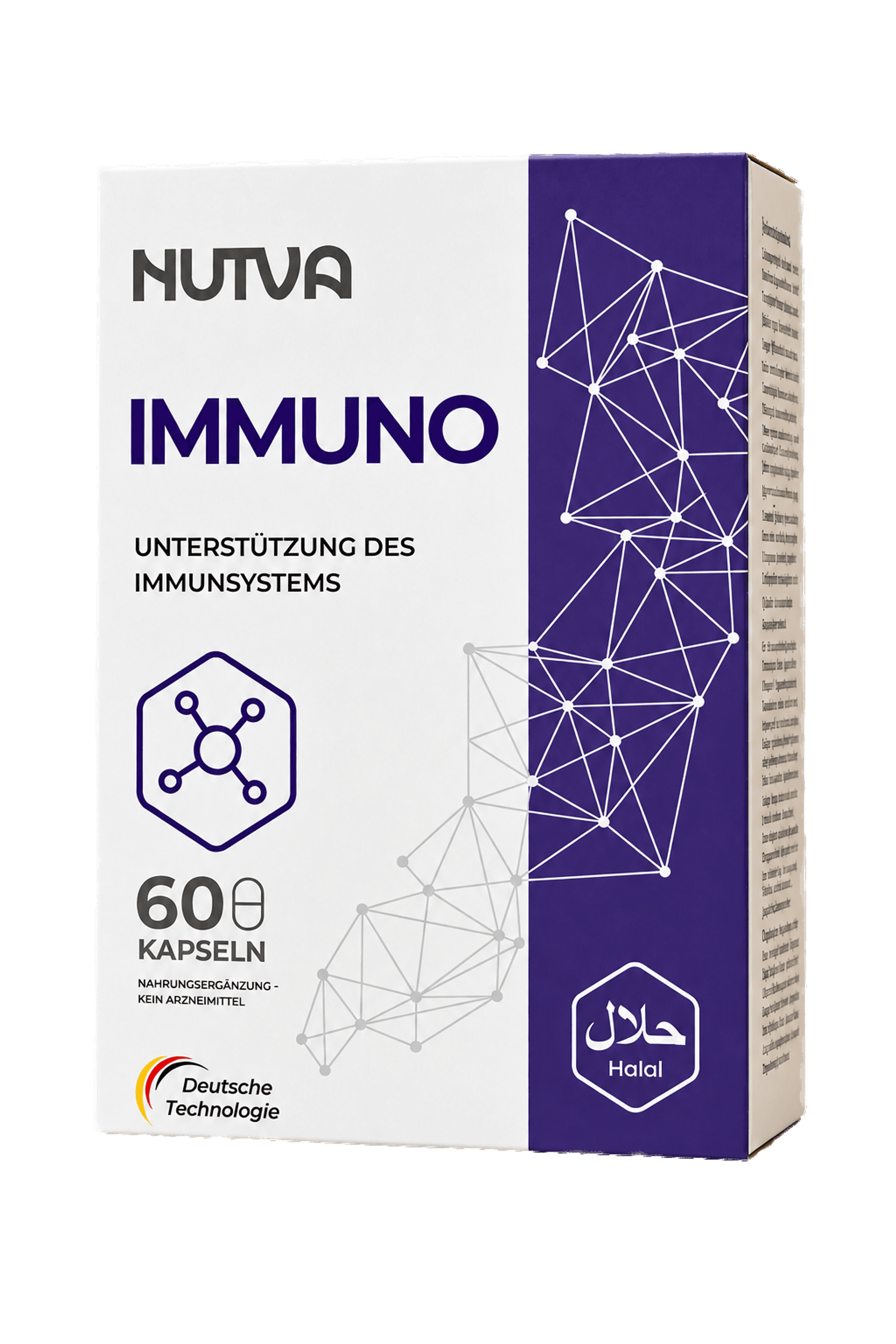
Nutva Immuno
Nutva Immuno contains a range of vitamins (A, C, D3, E and the B group, including B12 and folate) and minerals (iron, zinc, selenium, iodine, magnesium, calcium, manganese, copper, molybdenum, chromium). They support normal energy metabolism, the immune system, skin, hair and the nervous system. The product does not replace a varied diet but adds to it.
1 230 000 730 000 UZS · per box · when buying 3
Nutva Immuno contains iron, copper and vitamin A: it is not taken with iron overload (hemochromatosis) or Wilson's disease, or together with other iron supplements; in pregnancy it is not taken without the prescribed plan. If you take other vitamin supplements, count the total dose.