
Foods Good for the Liver: 25 Foods, a Table and a Sample Menu
What to eat more of for your liver and what to limit: a table, practical tips for Uzbek dishes and a one-day menu.
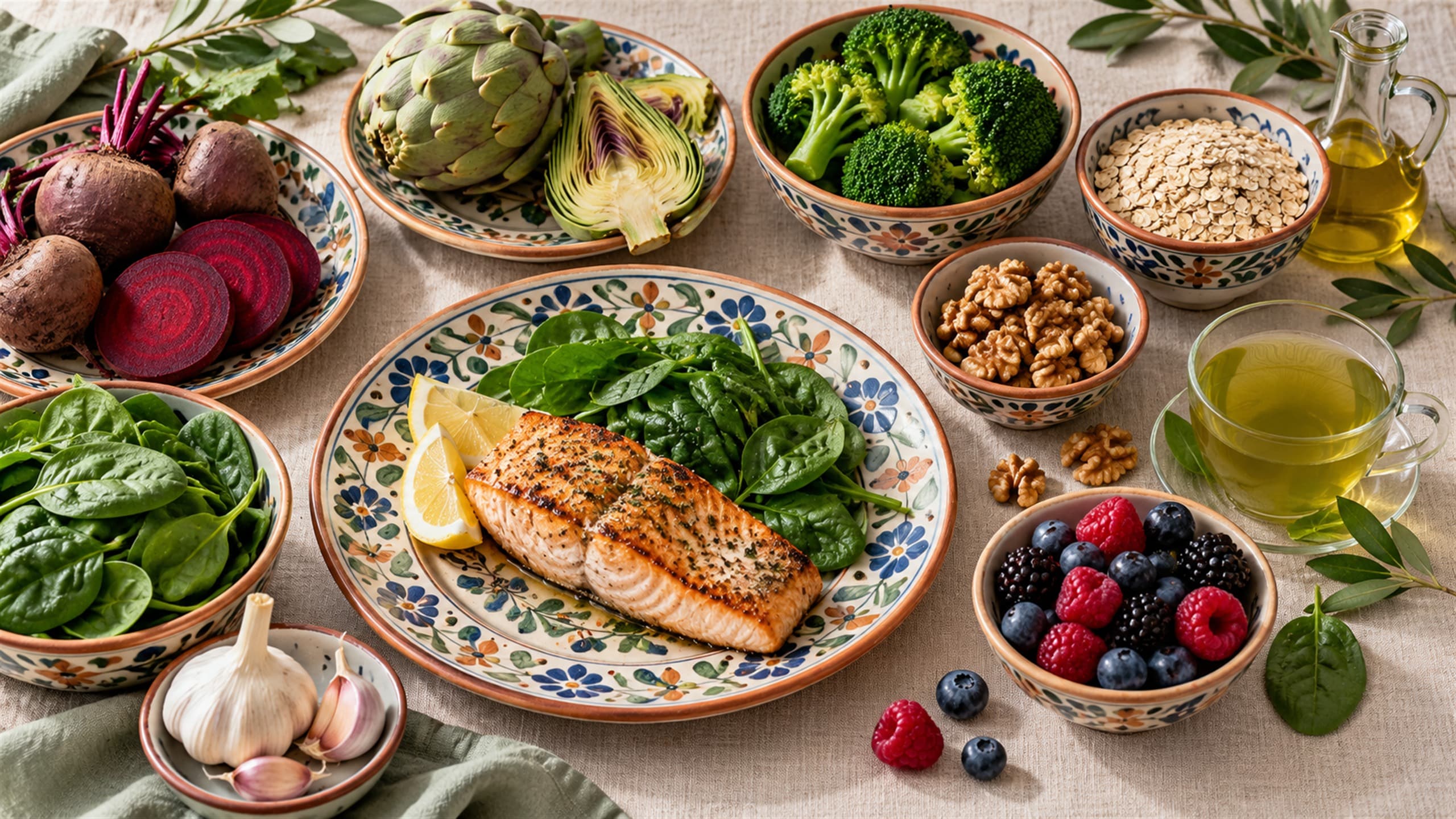
"Foods good for the liver": people often look for a "miracle" food, but what matters most for the liver is not a single dish but your whole diet. Below is a practical list: what to eat more of, what to limit, how to do it at an Uzbek table, and a sample one-day menu.
How should you eat for liver health?
NIDDK, which gives guidance on fatty liver disease, states the general principle as follows: more low-glycaemic foods (most fruit, vegetables and whole grains) and unsaturated fats, including omega-3; less sugar, saturated and trans fat, white bread, white rice and potatoes; and alcohol kept to a minimum.
The NHS says the same: balanced meals, about 150 minutes of activity a week and losing excess weight can reduce liver fat and help prevent further damage. In other words, a "liver diet" is ordinary healthy eating, just with stricter control of sugar and fat.
List of foods that are good for the liver
These groups can form the basis of your diet. Do not think of them as "treating the liver": they are part of healthy eating in general.
- Vegetables: tomatoes, cucumbers, carrots, pumpkin, spinach and herbs, broccoli, cabbage. They give fibre and fill you up, with few calories.
- Whole fruit: apples, pomegranate, oranges, tangerines. Whole fruit is better than juice, because juice has no fibre and the fructose adds up.
- Whole grains: buckwheat, oatmeal, dark bread. Their glycaemic index is lower than that of white bread.
- Legumes: mung beans, chickpeas, beans: a source of protein and fibre, and a good alternative to white rice.
- Fish and nuts: unsaturated fats, including omega-3. NIDDK specifically recommends unsaturated fats.
- Lean protein: chicken and turkey breast, skinless, not fried, boiled or baked.
- Vegetable oil: olive or sunflower oil, in moderation and better for salads than for frying.
What is bad for the liver: what to limit?
"Bad" here is not absolute: it is about amount and frequency.
- Sugar and sweet drinks. NIDDK advises limiting sweetened soft drinks, sports drinks, sweetened tea and juices because they are high in fructose. Table sugar is also broken down into fructose during digestion.
- Saturated and trans fats. Fatty meat, lamb tail fat, butter, margarine, fried fast food.
- High-glycaemic foods. White bread, white rice, potatoes, especially in large portions.
- Alcohol. It can cause further liver damage. If you drink, the NHS advice is no more than 14 units a week.
25 foods: a table of "good" and "limit"
For a quick overview, here is the full table:
| Food | Group | Why |
|---|---|---|
| Tomato and cucumber salad | Good | Vegetables: fibre and vitamins, low in calories |
| Carrots | Good | Vegetable with a low glycaemic index |
| Pumpkin | Good | Vegetable, easy to add to dishes |
| Spinach and herbs | Good | Leafy vegetables, almost fat-free |
| Broccoli, cauliflower, white cabbage | Good | Vegetables, a source of fibre |
| Apple | Good | Whole fruit (not juice): contains fibre |
| Pomegranate | Good | Seasonal whole fruit |
| Orange, tangerine, lemon | Good | Whole fruit, not juice |
| Buckwheat, oatmeal | Good | Whole grains, filling |
| Dark (whole-grain) bread | Good | Whole grain instead of white bread |
| Mung beans, chickpeas, beans | Good | Protein and fibre; an alternative to white rice |
| Fish (trout, carp, sea fish) | Good | Source of omega-3, unsaturated fats |
| Walnuts | Good | Unsaturated fats; a small handful |
| Chicken and turkey breast | Good | Lean protein; skinless and not fried |
| Fatty meat, kazy-karta, lamb tail fat | Limit | High in saturated fat |
| Butter, margarine, mutton fat | Limit | Saturated and trans fats |
| Large portion of greasy plov | Limit | Fat plus white rice: a heavy load |
| White bread, flatbread, pastries | Limit | High glycaemic index |
| White rice (large portion) | Limit | High glycaemic index |
| Fried potatoes | Limit | Glycaemic index plus frying fat |
| Sweet fizzy drinks | Limit | High in fructose |
| Sweetened tea | Limit | Added sugar |
| Packaged juices | Limit | High in fructose, no fibre |
| Cakes, pastries, sweets | Limit | Sugar and fat together |
| Alcohol | Limit | Can cause further liver damage |
The table is a guide, not a prescription. If you have diabetes or liver or gallbladder disease, build your diet together with a doctor or dietitian.
How to handle Uzbek dishes: plov, samsa, sweets, tea
You do not have to give up Uzbek cuisine; small changes in habits are enough.
- Plov. Make the portion smaller, use less oil and add plenty of achichuk salad. Better not often: once or twice a week.
- Samsa and fried food. Fatty and made with white dough, so have it less often; choose pumpkin or herb samsa baked in a tandoor.
- Shurpa and mastava. With lean meat or chicken and lots of vegetables, a good choice. Fat can be skimmed off the top.
- Tea. Drink it without sugar or with little; instead of sweets, put out dried fruit or nuts (a small handful).
- Sweets. Even at celebrations and when visiting, keep it moderate: a piece or two, not a whole plate.
For more on fatty liver not related to alcohol, see our fatty liver guide, and for myths read liver cleanse: myths and facts.
Sample one-day menu for the liver
- Breakfast: oatmeal or buckwheat porridge, one egg, tomato and cucumber salad, tea without sugar.
- Lunch: shurpa (mastava) with chicken or lean meat, green salad, a slice of dark bread.
- Snack: one apple and a small handful of nuts.
- Dinner: baked fish, boiled or stewed vegetables (broccoli, pumpkin), a portion of mung beans or chickpeas.
- Through the day: plain water, no sweet drinks.
This is only an example: amount and composition depend on your age, weight and health conditions. A 20 to 30 minute walk after eating helps too.
Beyond food choices: portions and habits
Along with food quality, quantity matters too: NIDDK and the NHS treat excess weight as one of the main risk factors for fatty liver disease. So simple habits matter as much as a food list:
- serve meals on a smaller plate and eat unhurriedly;
- write a list before going to the market: more vegetables and fruit, fewer ready-made sweets;
- read labels and look for words like "sugar" and "glucose-fructose syrup";
- choose home-boiled or baked food instead of fast food and fried dishes;
- drink mainly plain water and tea without sugar.
Habits form gradually: even one change a week is a good start.
When to see a doctor
Changing your diet does not replace a medical check. According to the NHS, liver disease often has no symptoms early on. See a doctor if you have:
- yellowing of the skin or whites of the eyes;
- persistent pain or discomfort under the right ribs;
- unexplained tiredness, loss of appetite or weight loss;
- itchy skin;
- a swollen belly or swollen legs;
- vomiting blood, black stools or sudden confusion: call emergency services immediately.
If you are overweight, have diabetes or liver disease runs in the family, talk to a doctor about testing (liver enzymes, ultrasound).
How Nutva Liver can support normal liver function
Nutva Liver is a dietary supplement (BFQ) designed to support normal liver function and natural metabolic processes. One capsule (500 mg) contains: silymarin 100 mg, ursodeoxycholic acid (UDCA) 100 mg, S-adenosylmethionine (SAMe) 65 mg, N-acetylcysteine (NAC) 50 mg, glutathione 40 mg, artichoke (Cynara scolymus) 40 mg, L-ornithine-L-aspartate (LOLA) 40 mg, inulin 15 mg, vitamin E 10 mg, glycyrrhizic acid 10 mg, betaine 10 mg, probiotics (Lactobacillus, Bifidobacterium) 10 mg and catechins 10 mg. The pack holds 60 capsules.
Permit number: №1578934. This product is not a medicine. If you have gallstones, bile duct obstruction, liver disease under treatment or are pregnant, consult a doctor first; the supplement does not replace prescribed treatment. How to take it: follow the instructions on the pack and your doctor's advice. Supplements do not replace a balanced diet, sleep, physical activity and prescribed medicines. Product page: Nutva Liver.
Frequently asked questions
Which fruits are good for the liver?
Whole fruit such as apples, pomegranate, oranges and tangerines is a good choice. Eat the whole fruit instead of juice: it has fibre, and the fructose is absorbed more slowly.
Which drinks are best for the liver?
The best choice is plain water and tea without sugar. NIDDK advises limiting sweetened tea, juices, sports drinks and sweet fizzy drinks because they are high in fructose. Do not expect a drink to give a special benefit: the point is that it adds no sugar or extra calories.
Which fats and oils are best for the liver?
NIDDK favours unsaturated fats, including omega-3, and advises limiting saturated and trans fats. In practice that means moderate amounts of fish, nuts and vegetable oil, and less butter, lamb tail fat and fatty meat.
What is bad for the liver?
Alcohol, sweet drinks, excess sugar, saturated and trans fats, and large portions of white bread and white rice. You do not have to ban them entirely, but avoid eating them often and in large amounts.
Can you eat plov with fatty liver?
Sometimes, in a small portion, with plenty of salad and in a lighter version. For an exact plan, ask a doctor or dietitian, as everyone's situation is different.
How should you cook diet meals for the liver?
Choose boiling, stewing or baking instead of frying, use less oil, trim visible fat from meat and add more vegetables.
This article is for general information. It does not replace a doctor's examination or treatment. Nutva products are not medicines.