
Omega 3 6 9 benefits and differences: which you need and when a 3-6-9 blend isn't worth it
How omega-3, 6 and 9 differ, which are essential, where to get them, and why a mixed blend often adds little.
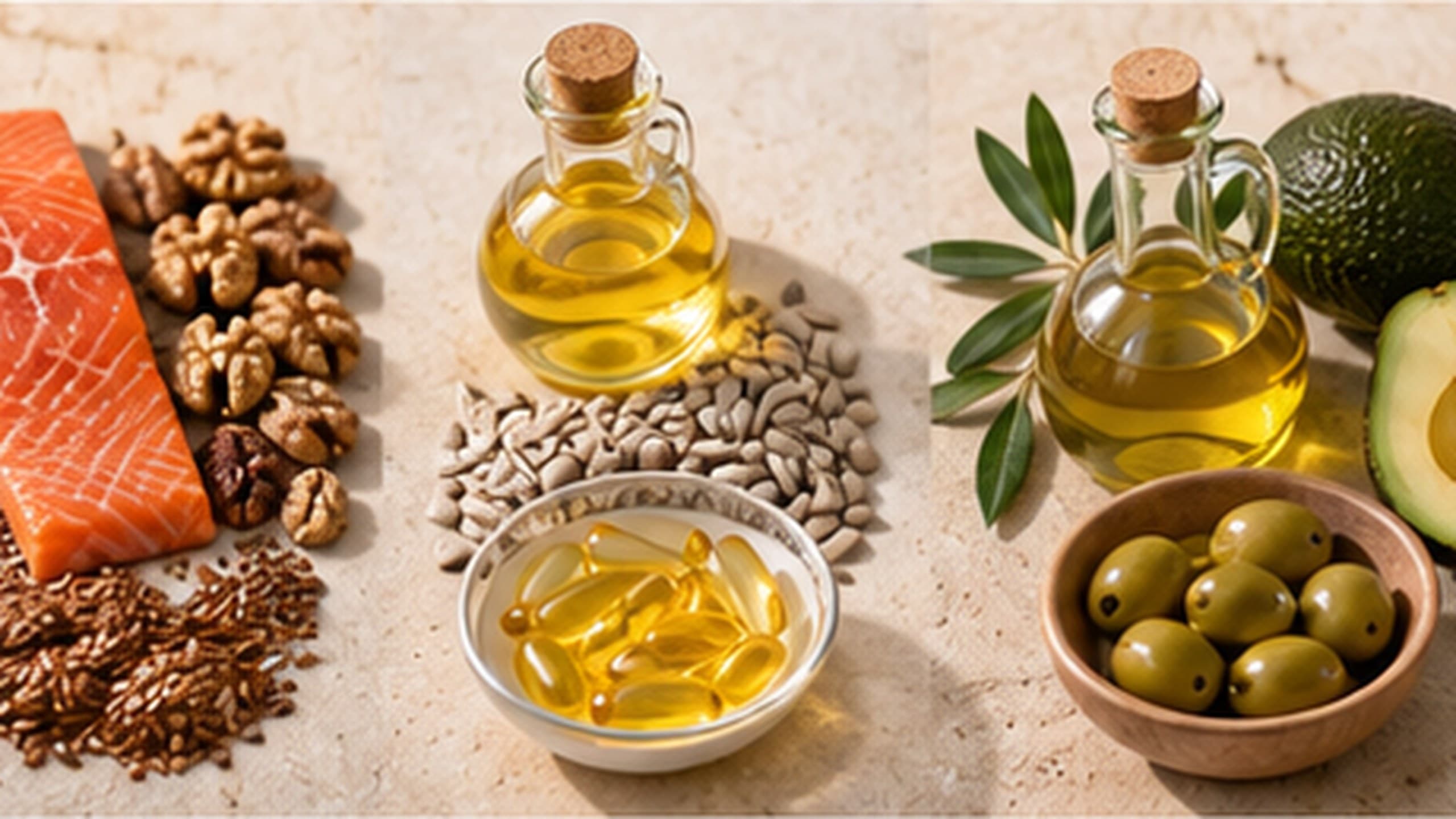
If you have stood in front of a pharmacy shelf looking at "Omega-3", "Omega-3-6-9" and even "Omega-9" boxes and wondered which one to buy, you are not alone. Many people assume that more numbers mean more benefit. In reality, the benefits of omega 3, 6 and 9 are not the same: these three groups of fatty acids work differently in the body and appear in very different amounts in everyday food. In this article we explain the difference in plain language, which of them are essential, and why a "3-6-9" blend is not always a sensible choice.
What are omega-3, 6 and 9, and what do the numbers mean?
Omega-3, omega-6 and omega-9 are three families of unsaturated fatty acids. The number in the name refers to chemical structure: counting from the so-called "omega" end of the fatty acid chain, it shows at which carbon atom the first double bond sits. In other words, the number says nothing about strength or benefit — only about the shape of the molecule.
Omega-3 and omega-6 are polyunsaturated fats, while omega-9 are mainly monounsaturated fats. All three are unsaturated: according to the NHS, swapping saturated fat (fatty meat, butter, palm oil) for them is good for cholesterol.
Which of them are essential?
This is the most important difference. The body can make some fatty acids itself and can get others only from food.
- Omega-3 (ALA — alpha-linolenic acid) and omega-6 (LA — linoleic acid) are essential fatty acids. According to the Linus Pauling Institute, humans lack the enzymes to make them, so they must come from food.
- Omega-9 (for example, oleic acid) are non-essential fats. The body can make monounsaturated fatty acids from carbohydrates and proteins too.
So "omega-9 deficiency" is practically unheard of with a normal diet. Omega-6 is also plentiful in most people's diets. What is often in short supply is omega-3, especially its EPA and DHA forms.
Omega-3: the difference between ALA, EPA and DHA
The omega-3 family has three main fatty acids:
- ALA — in plant sources: flaxseed and flaxseed oil, walnuts, rapeseed and soybean oil.
- EPA and DHA — mainly in fish and seafood, especially oily fish (salmon, mackerel, herring, sardines, trout).
The body can convert some ALA into EPA and DHA, but this process is limited. According to studies cited by the Linus Pauling Institute, healthy young men convert about 8% of ALA to EPA and 0–4% to DHA, while in women the figures are higher — about 21% and 9%. That is why flax and walnuts are useful but cannot fully replace fish.
We cover why omega-3 matters for the heart, brain and eyes in our complete guide to omega-3 benefits.
Omega-6: where is it found, and should you fear it?
The main omega-6 is linoleic acid. It is abundant in sunflower, corn and soybean oil, and in walnuts, almonds, cashews and sunflower seeds. Cottonseed oil, widely used in Uzbekistan, is also a vegetable oil rich in polyunsaturated fats, including omega-6.
According to the NHS, most people already get enough omega-6 from food. This also fits the Uzbek table, where dishes cooked in vegetable oil are eaten almost every day: plov, qovurma, samsa and salads.
You often read online that "omega-6 causes inflammation and should be avoided". The Linus Pauling Institute points out that calling everything made from omega-6 "pro-inflammatory" is an oversimplification, since some of these substances actually help resolve inflammation. Replacing saturated fat with omega-6 also lowers total cholesterol. So omega-6 is not the enemy; the problem is usually not too much omega-6 but too little omega-3, and too much fried and fatty food overall.
Omega-9: the fats in olive oil and nuts
The best-known omega-9 is oleic acid. It is abundant in olive and rapeseed oil, avocados, almonds, peanuts and other nuts. According to the NHS, monounsaturated fats help lower "bad" LDL cholesterol while keeping "good" HDL steady.
Omega-9 is a useful fat, but the body can make it and it is found in many foods. So there is usually no need to take omega-9 as a separate capsule: a spoonful of olive oil or a handful of nuts gives you more than a capsule does.
Omega 3, 6 and 9 comparison table
| Omega-3 | Omega-6 | Omega-9 | |
|---|---|---|---|
| Type of fat | polyunsaturated | polyunsaturated | monounsaturated |
| Essential? | yes (ALA) | yes (LA) | no, the body makes it |
| Main sources | oily fish (EPA, DHA); flax, walnuts (ALA) | sunflower, corn, soybean oil, nuts | olive and rapeseed oil, avocado, almonds, peanuts |
| Enough in a typical diet? | often low, especially EPA and DHA | enough for most people | enough for most people |
| Need for a supplement | if you eat little fish, can be discussed with a doctor | usually not | usually not |
When does an "Omega 3-6-9" blend make little sense?
A mixed blend is not bad in itself, but often it does not do the job people buy it for. The reasons:
- Space in a capsule is limited. When part of the capsule goes to omega-6 and omega-9, there is less room for EPA and DHA. As a result, the same number of capsules may contain less omega-3.
- Omega-6 and 9 already come from food. Most diets already contain plenty of them, so "adding" them in a capsule changes almost nothing.
- The omega-3 part may be ALA. Some blends are made from plant oils and give omega-3 as ALA. As explained above, little EPA and DHA is made from ALA.
- The "ideal ratio" promise. Some labels speak of "the right ratio of omega-3, 6 and 9". There is no single proven standard for such an "ideal ratio", so this may simply be marketing language.
In short, if your goal is EPA and DHA, it makes more sense to look at an omega-3 product whose label clearly states the amount of EPA and DHA. We explain how to read the label and take the capsules in a separate article on how to take omega-3.
How can you balance fats in your everyday diet?
The balance of fatty acids is set first by your plate, not by a capsule. A few practical steps:
- Fish twice a week. The NHS recommends at least two portions of fish a week, one of them oily. Fish available in Uzbekistan works, as does frozen or canned oily fish.
- Less oil, but the right kind. Instead of frying in lots of oil, stew, boil and bake more often. Use a little olive or flaxseed oil for salads.
- Swap saturated fat. Cut down on tail fat, butter and clotted cream in favour of vegetable oils and nuts. The WHO recommends keeping saturated fat below 10% of daily energy.
- A handful of nuts or seeds a day. Walnuts give ALA and omega-6, while almonds and peanuts are rich in omega-9.
If your cholesterol is high, read our guide on how to lower cholesterol without medication to see how to change your diet.
When to see a doctor
Talk to a doctor before starting an omega-3 or 3-6-9 supplement if:
- you take a blood thinner (for example, warfarin) or bleed easily;
- you have surgery or a dental extraction planned;
- you are pregnant, breastfeeding or planning a pregnancy;
- you are allergic to fish or seafood;
- your tests show high cholesterol or triglycerides, or you have heart or blood vessel disease;
- you are choosing a supplement for a child.
If you develop a rash, swelling of the face or lips, difficulty breathing, black stools or unusual bleeding (gums, nose, unexplained bruising) while taking a supplement, stop taking it and see a doctor. With squeezing chest pain or sudden problems speaking, call an ambulance immediately. You can find more about blood vessel health in our atherosclerosis guide.
How Nutva Omega-3 can help
Nutva Omega-3 is not a "3-6-9" blend but a biologically active supplement that is a source of omega-3 only, 60 capsules per pack. Each capsule contains 992 mg of omega-3 fatty acid concentrate in rTG (re-esterified triglyceride) form, including EPA 450 mg and DHA 300 mg. Mixed tocopherols 10 mg and ascorbyl palmitate 4 mg are added as antioxidants. Omega-6 and omega-9, as explained above, usually come from food.
The product supports the normal function of the heart and blood vessels, the brain and nervous system, vision and cell membranes. Manufacturer: NUTVA PHARM LLC (Uzbekistan), permit №1578936. The product is not a medicine.
Precautions: if you take blood thinners or have surgery planned, consult a doctor first; the product does not replace prescribed medicines. How to take it: follow the instructions on the pack and your doctor's advice. Supplements do not replace a balanced diet, sleep and physical activity.
Frequently asked questions
What are the benefits of omega 3 6 9, and is it better than omega-3?
All three groups are unsaturated fats and a useful part of the diet. But most people already get enough omega-6 and omega-9, so a blend is usually no better than an omega-3-only product. What matters is the amount of EPA and DHA on the label.
Do I need to take omega-9 separately?
Usually not. The body can make omega-9 itself, and it is abundant in olive oil, nuts and avocados. It is easier to get from food than from capsules.
Is omega-6 harmful?
No, omega-6 is an essential fatty acid that the body needs. The problem is usually not omega-6 itself but too little omega-3 and too much fried, fatty food.
Can flaxseed oil replace fish oil?
Not fully. Flaxseed oil provides ALA, and the body converts only a small part of ALA into EPA and DHA. Flax is useful but does not fully replace fish and sources of EPA/DHA.
Who should not take omega 3 6 9?
Exact restrictions are set by the product instructions and your doctor. People taking blood thinners, those about to have surgery, pregnant and breastfeeding women, and people allergic to fish should talk to a doctor first.
This article is for general information. It does not replace a doctor's examination or treatment. Nutva products are not medicines.