What is it?
Attention deficit hyperactivity disorder (ADHD) is a neurodevelopmental condition shown by difficulty concentrating, high activity and acting without thinking. It is usually noticed in childhood and mostly affects children, but in some people it continues into adult life.
The causes are mainly linked to the way the brain develops and to heredity; parenting mistakes or sugar are not behind it. A steady daily routine, sleep, movement and good food help make the condition easier to live with. Omega-3 fatty acids are a part of brain tissue, which is why people often ask about them.
Main symptoms
- Difficulty concentrating: it is hard to finish a task or keep track of details.
- Distractibility: outside noises or thoughts often pull attention away from the task.
- High activity: trouble sitting still for long, restlessness, talking a lot.
- Impulsiveness: answering before the question is finished, difficulty waiting for a turn.
- Forgetfulness: often losing things, forgetting tasks and deadlines.
- Trouble organising: planning, keeping things in order and keeping track of time are hard.
Causes and risk factors
- Heredity: ADHD is more common in some families, so genetic factors play a notable role.
- Features of brain development: differences in how the areas responsible for attention and self-control work.
- Premature birth and low birth weight: one of the risk factors.
- Smoking or alcohol during pregnancy: may negatively affect the child's brain development.
- Environmental factors: for example exposure to lead.
- Parenting and sugary food are not causes of ADHD: this is a common misconception.
Prevention and self-care
Keep a steady daily routine
When times for meals, lessons, play and sleep are clear, it is easier to focus.
Get enough sleep
Lack of sleep worsens attention and behaviour; keep a regular bedtime.
Be active every day
Outdoor play and sport help use up extra energy.
Limit screen time
Cut down time on the phone and TV and add reading or games.
Eat a balanced diet
Vegetables, fruit, whole grains and fish twice a week balance the diet.
Do not smoke or drink during pregnancy
This is one of the most important habits for protecting a child's brain development.
Nutva
Nutva products to support your body
As a complement to a healthy lifestyle. These products are not medicines.
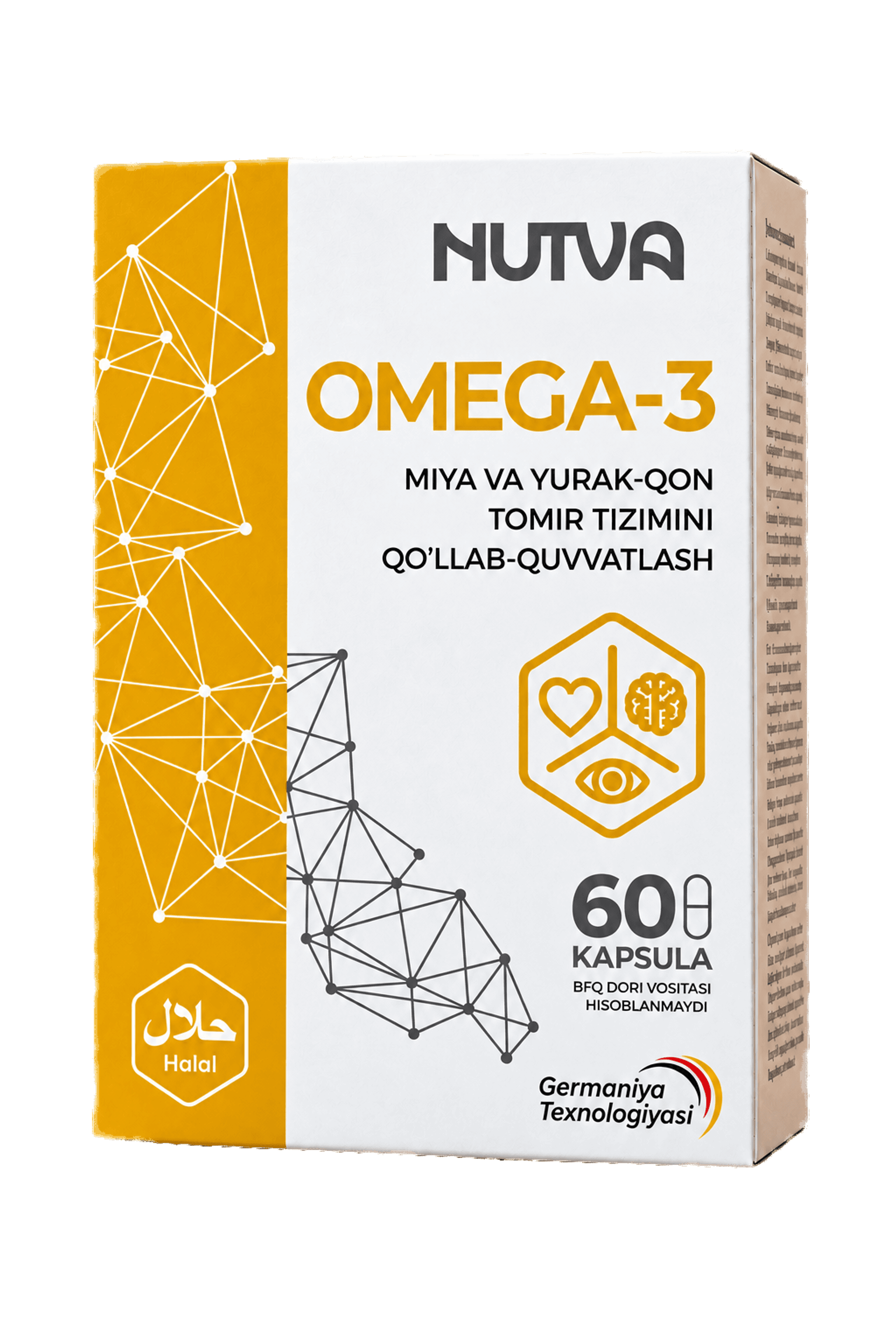
Nutva Omega-3
DHA in Nutva Omega-3 is an omega-3 fatty acid studied in scientific work on the brain and nervous system; the product also contains EPA. The product is dosed for adults: the daily 2 capsules provide 1500 mg of EPA and DHA (900 mg EPA and 600 mg DHA). It supports the body as an addition to a healthy lifestyle.
640 000 380 000 UZS · per box · when buying 3