What is it?
Hormones are chemical messengers made by the body's glands that help regulate the menstrual cycle, skin and hair, mood, sleep and metabolism. Their levels are linked: when one shifts, others can change too. That is why a hormonal imbalance usually shows up as several signs together rather than just one.
In women the most common signs are irregular periods, acne, extra hair growth on the face and body, hair thinning, sharp mood swings and unexplained weight change. Many of these can be related to stress, poor diet, lack of sleep and reduced insulin sensitivity. Causes differ, so do not diagnose yourself; this page gives general information only.
Main symptoms
- Irregular cycle: the gap between periods may shorten or lengthen, and periods may be late or missed.
- Skin changes: acne on the face and body, oily skin, or dryness may appear.
- Excess hair and hair loss: coarse hair may grow on the face, chest or abdomen while the hair on the scalp thins.
- Mood changes: irritability, anxiety, low mood or swings with no obvious reason.
- Weight change: weight gain despite usual eating, especially fat gathering around the waist.
- Tiredness and sleep problems: sluggishness during the day, trouble falling asleep or frequent waking at night.
Causes and risk factors
- Chronic stress: constant tension affects cortisol and can shift the balance of other hormones.
- Reduced insulin sensitivity: when cells respond less to insulin, the balance of reproductive hormones can change too.
- Poor diet: plenty of sugar and refined foods with too little protein and fibre puts a load on metabolism.
- Lack of sleep: regularly sleeping too little disturbs the rhythm of hormones tied to appetite and stress.
- Excess or very low body weight: fat tissue takes part in hormone metabolism, so sharp changes in weight can upset the balance.
- Conditions linked to the ovaries and thyroid: for example polycystic ovary syndrome or changes in thyroid function; testing is needed to tell.
Prevention and self-care
Track your cycle
Note the start dates of your periods and any changes so irregularity is noticed early.
Sleep regularly
Go to bed at the same time and aim for 7–8 hours of sleep.
Limit sugar
Cut back on sweets and white-flour foods and add protein, vegetables and whole grains.
Keep moving
At least 150 minutes of moderate activity a week helps support insulin sensitivity.
Manage stress
Walks, breathing exercises or a favourite hobby help ease everyday tension.
Keep a steady weight
Avoid crash diets; change weight gradually and sustainably.
Nutva
Nutva products to support your body
As a complement to a healthy lifestyle. These products are not medicines.
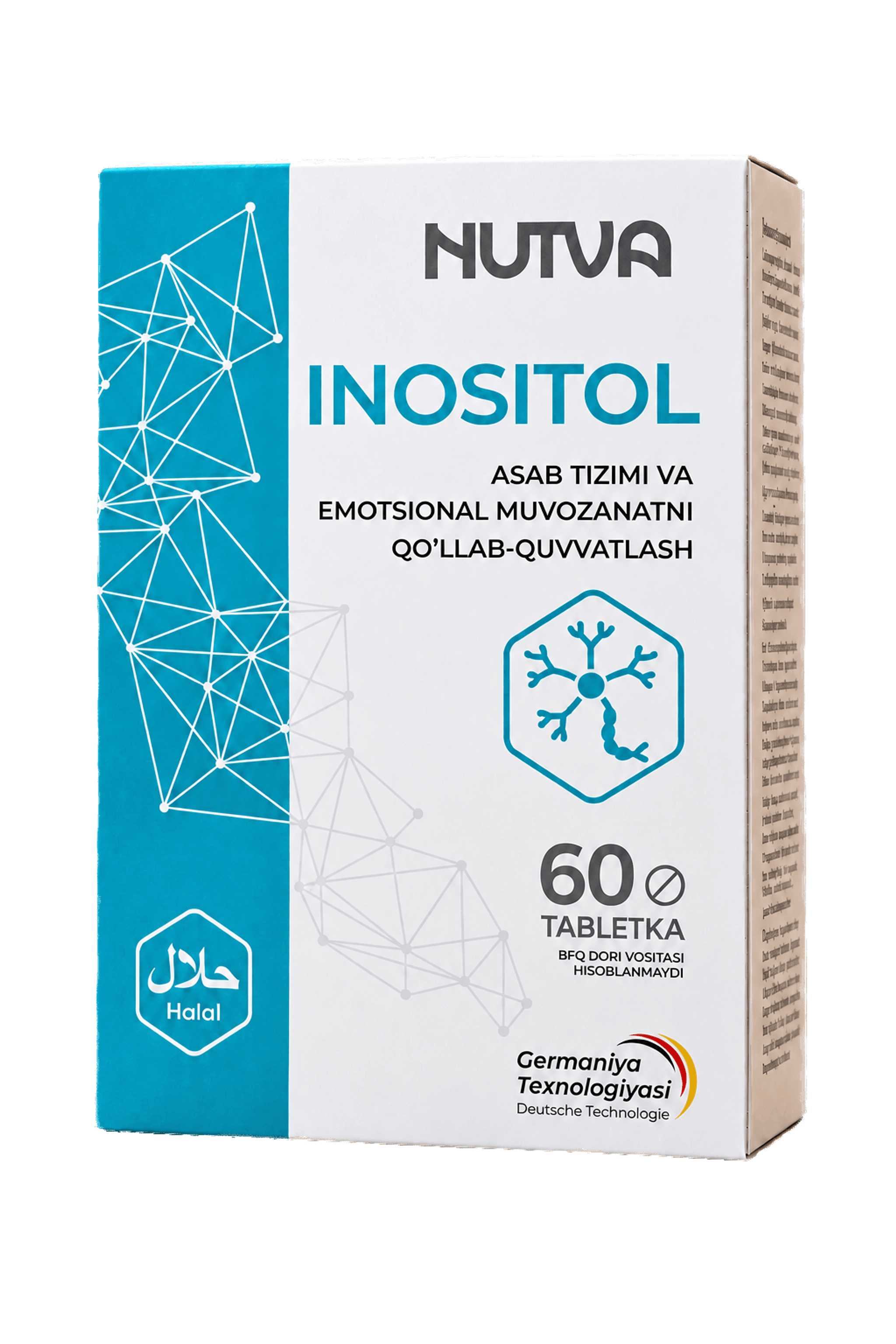
Nutva Inositol
The myo-inositol in Nutva Inositol has been studied in processes linked to insulin signalling in cells and to ovarian function, while 5-MTHF (the active form of folate) takes part in cell division and blood formation. The product helps support the body; an effect on hormone levels has not been confirmed, and it does not replace prescribed treatment.
520 000 310 000 UZS · per box · when buying 3