
Liver Pain Symptoms: What Pain Under the Right Ribs Can Mean
Where the liver hurts, when right-sided pain comes from other organs, and which signs mean you should see a doctor straight away.
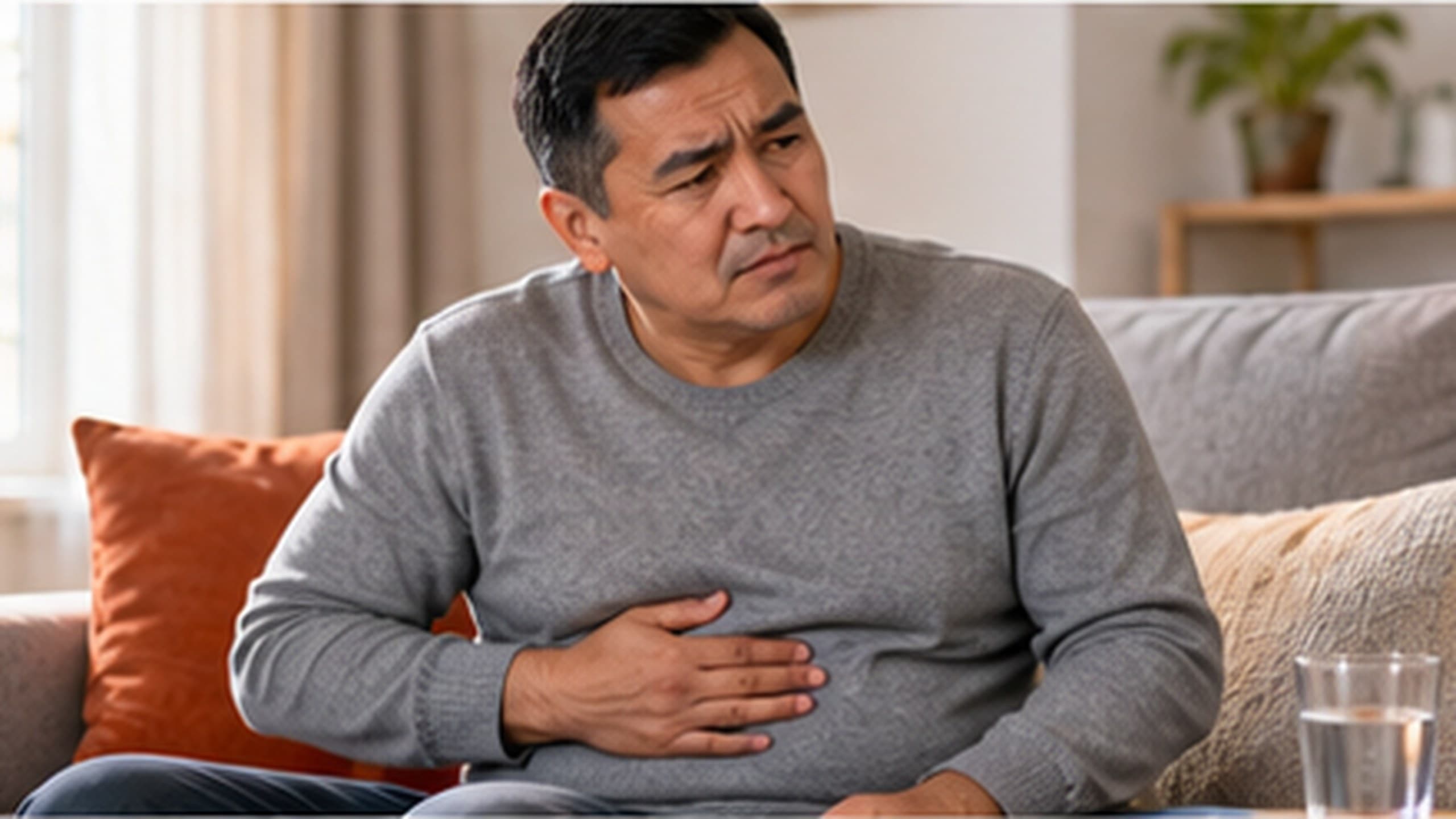
When heaviness or a stabbing feeling appears under the right ribs, many people immediately think "my liver hurts". In reality, liver pain symptoms often look different: most liver diseases cause no pain for a long time, and pain on the right side often comes from the gallbladder, gut or muscles. This article explains, in plain words, where the pain is felt, what may be behind it, which signs need urgent help and what a doctor will check.
Where is liver pain felt?
The liver sits in the upper right part of the abdomen, under the right ribs. So liver-related discomfort is usually felt under the right ribs, sometimes in the upper middle of the abdomen. People describe it as heaviness, fullness, a pulling feeling or a dull ache.
Sometimes the pain spreads to the right shoulder blade, right shoulder or back. It can come from the liver itself or from the gallbladder next to it. The location alone is not a diagnosis: a doctor assesses it together with other signs and test results.
Why does the liver itself rarely hurt?
Liver tissue has very few pain-sensing nerve endings. Pain usually appears when the liver enlarges and stretches the thin membrane (capsule) around it, or when nearby organs, such as the gallbladder or bile ducts, are affected. In acute hepatitis, for example, the liver can swell and cause pain under the ribs.
So here is the key point: no pain does not mean a healthy liver. According to the NHS, many types of liver disease cause no symptoms in the early stages, and symptoms often appear only once the liver is already seriously damaged. Fatty liver (hepatic steatosis) is usually "silent" too: according to NIDDK, some people only feel tired or have discomfort in the upper right abdomen.
Pain under the right ribs: not always the liver
Several organs sit under the right ribs, so the source of pain can vary. The table shows rough differences. It is not for self-diagnosis, but to help you ask your doctor the right questions.
| Possible source | What the pain is like | Other signs |
|---|---|---|
| Liver (fatty liver, hepatitis) | Dull, constant heaviness or fullness; often no pain at all | Tiredness, poor appetite, nausea, sometimes jaundice |
| Gallbladder (stones) | Sudden, severe, constant pain lasting from 30 minutes to several hours | Nausea, vomiting; pain may spread to the shoulder blade or back |
| Stomach, bowel, duodenum | Linked to meals, stabbing or burning | Bloating, burping, constipation or diarrhoea |
| Muscles and ribs | Worse with movement, bending or pressing | Started after exertion or an injury |
| Right kidney | More in the lower back and side, may come in waves | Change in urine, frequent urination, fever |
Pneumonia or shingles can also cause pain under the ribs. So if the pain lasts more than a few days or keeps coming back, do not assume it is "the liver" and try to manage it at home.
Causes of liver pain: the most common ones
The NHS lists the main causes of liver disease:
- Fatty liver. Linked to excess weight, type 2 diabetes and high blood fats (triglycerides). Often has no symptoms. Read more in our fatty liver guide.
- Alcohol. Regularly drinking too much damages the liver and over time can lead to cirrhosis.
- Viral hepatitis. According to the NHS, hepatitis can cause pain under the right ribs, jaundice, dark urine, pale stools, tiredness, nausea and fever. But many people have no symptoms for a long time.
- Inherited and immune conditions. For example, iron building up in the body (haemochromatosis) or immune-related liver diseases.
- Medicines and some herbal products. Some medicines can raise liver enzymes. Taking more painkillers than recommended, especially paracetamol, is dangerous for the liver.
Gallstones deserve a special mention. According to the NHS, when a stone blocks a bile duct it causes severe, constant pain in the middle of the abdomen or under the right ribs that lasts more than 30 minutes, sometimes several hours, and may come with nausea or vomiting.
Signs of liver disease: what to watch for besides pain
Other signs tell you more about the liver than pain does. The NHS lists these symptoms of liver damage:
- constant tiredness and weakness;
- loss of appetite, which may lead to weight loss;
- yellowing of the skin and whites of the eyes (jaundice);
- itchy skin;
- feeling or being sick.
With jaundice, urine often becomes dark and stools pale. On darker skin, the whites of the eyes are usually the clearest sign. None of these signs is something to "keep an eye on at home": they need a doctor's assessment.
What to do, and what not to do, when your liver hurts
If the discomfort under the right ribs is mild and there are no warning signs, these steps help:
- note when the pain started, what it seems linked to (fatty food, alcohol, exertion) and how long it lasts;
- stop alcohol and cut back on heavy, fatty food for now;
- make a list of all medicines, vitamins and herbal products you take: your doctor will need it;
- book an appointment with your family doctor and ask about blood tests and an ultrasound.
There are also things to avoid:
- "Tubage" and home bile-flushing methods. If you have gallstones, they can trigger a pain attack. We cover this in our article on liver cleanse myths.
- Masking the pain with lots of painkillers. This hides the cause, and some medicines strain the liver in large doses.
- Waiting at home with fever, vomiting or jaundice. Time matters in these cases.
How does a doctor check the liver?
A check-up usually starts with questions and an examination: the doctor asks about the pain, alcohol, medicines, weight and family history, and feels your abdomen. Then they may order:
- Blood tests. Liver enzymes (ALT, AST, alkaline phosphatase, GGT), bilirubin, albumin. We explain what these mean in our article on the ALT and AST test.
- Hepatitis B and C tests. Important because these infections can stay silent for a long time.
- Abdominal ultrasound. Helps show liver fat, gallstones and the bile ducts.
- Elastography. According to NIDDK, it measures liver stiffness and helps assess scarring (fibrosis).
The doctor interprets the results together. Do not draw conclusions from a single value or choose a "liver medicine" for yourself.
When to see a doctor
Book an appointment with your family doctor soon if:
- heaviness or pain under the right ribs lasts more than a few days or keeps coming back;
- you have unexplained constant tiredness, loss of appetite or weight loss;
- you notice itchy skin, dark urine or pale stools;
- you are overweight, have diabetes, drink alcohol or are at risk of hepatitis and have never had your liver checked.
Call emergency services or go to the emergency department immediately if:
- sudden severe abdominal pain starts, or the pain does not ease after 30 minutes;
- the pain spreads to your back and comes with vomiting;
- you have a high temperature, chills or shivering;
- your skin or the whites of your eyes turn yellow;
- you vomit blood, have black stools or become suddenly confused or drowsy.
Do not drive yourself: ask someone close to take you, or call an ambulance.
How Nutva Liver can support normal liver function
First, the main point: liver pain is a reason to see a doctor, not a reason to pick a supplement. Once you have been checked and made a plan with your doctor, you can ask about dietary supplements as an addition to healthy eating and activity.
Nutva Liver is a dietary supplement (BFQ) designed to support normal liver function and natural metabolic processes. It is made by NUTVA PHARM LLC, Uzbekistan. One capsule (500 mg) contains: silymarin 100 mg, ursodeoxycholic acid (UDCA) 100 mg, S-adenosylmethionine (SAMe) 65 mg, N-acetylcysteine (NAC) 50 mg, glutathione 40 mg, artichoke (Cynara scolymus) 40 mg, L-ornithine-L-aspartate (LOLA) 40 mg, inulin 15 mg, vitamin E 10 mg, glycyrrhizic acid 10 mg, betaine 10 mg, probiotics (Lactobacillus, Bifidobacterium) 10 mg, catechins 10 mg. The pack holds 60 capsules.
Permit number: №1578934. This product is not a medicine and is not intended to address the cause of pain. If you have gallstones, bile duct obstruction, liver disease under treatment or are pregnant, consult a doctor first; the supplement does not replace prescribed treatment. How to take it: follow the instructions on the pack and your doctor's advice. Supplements do not replace a balanced diet, sleep, physical activity and prescribed medicines. Product page: Nutva Liver.
Frequently asked questions
What does liver pain feel like?
Most often it is not sharp pain but a dull heaviness or fullness under the right ribs. Liver tissue itself rarely hurts, so severe, sudden pain is more likely linked to the gallbladder or other organs. Only an examination and tests can show the exact cause.
Are liver pain symptoms different in women and men?
The main signs are the same: discomfort under the right ribs, tiredness, poor appetite, jaundice. In women, right-sided pain can also have gynaecological causes, and in pregnancy it can be linked to specific conditions, so pregnant women should tell a doctor about such pain straight away.
Which tests should I have if my liver hurts?
Usually a blood chemistry panel (ALT, AST, bilirubin, alkaline phosphatase, GGT), hepatitis B and C markers and an abdominal ultrasound. Your doctor decides which tests you need. To understand the results, read our article what ALT and AST mean.
Can the liver be diseased without hurting?
Yes, and it is common. According to the NHS, many liver diseases cause no symptoms at first. So people who are overweight, have diabetes, drink alcohol or are at risk of hepatitis should get checked from time to time without waiting for pain.
What should I take for pain under the right ribs?
Taking medicines or "liver teas" without knowing the cause is not recommended. Stop alcohol, eat light meals and book a doctor's appointment. If the pain is severe, lasts more than 30 minutes, or comes with fever or jaundice, call an ambulance.
This article is for general information. It does not replace a doctor's examination or treatment. Nutva products are not medicines.