
What Is Silymarin? UDCA, Ademetionine and Other Liver Hepatoprotectors
Learn what silymarin, UDCA, ademetionine, NAC, glutathione, artichoke and LOLA are, what they are studied for and how strong the evidence is.
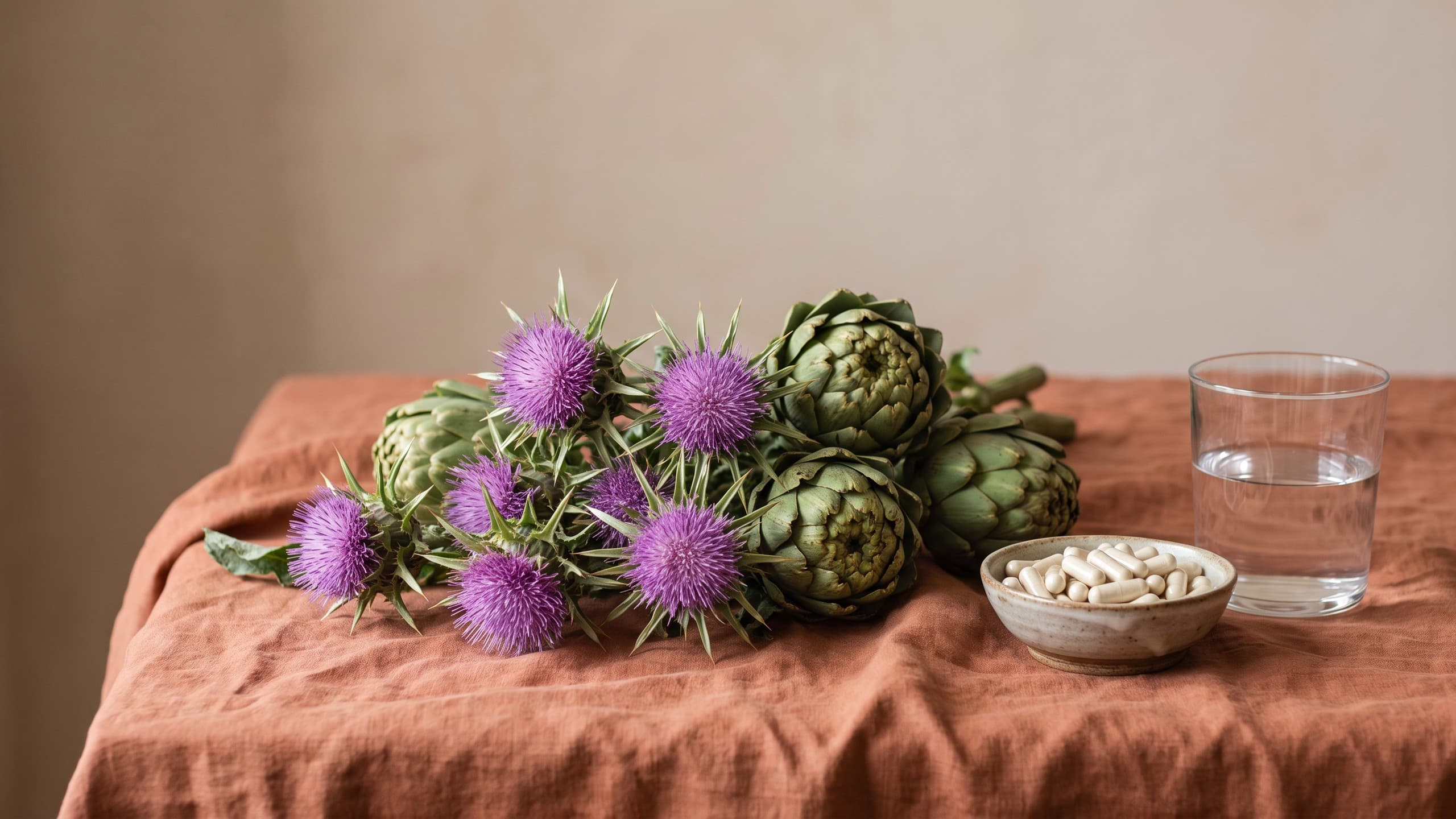
Ask at a pharmacy for "something for the liver" and you will be shown packs containing silymarin, ursodeoxycholic acid or ademetionine. What silymarin is, how liver "hepatoprotectors" really work and whether you can pick one yourself are some of the most common liver questions. In this article we look at each substance separately: what it is, what it is studied for and how strong the scientific evidence is. The aim is neither to scare you nor to sell you anything, but to help you have an informed conversation with your doctor.
What are hepatoprotectors, and why is the term debated?
"Hepatoprotector" literally means "liver protector". The term is widely used in post-Soviet countries, where it covers very different substances: plant extracts, amino acids, bile acids, phospholipids and more. In Western evidence-based medicine there is no single drug class called "hepatoprotectors" with a shared evidence base; each substance is assessed on its own, for its own indications and in its own studies.
This matters because very different things sit under the same label:
- some are registered as medicines for specific diseases, and a doctor sets the dose;
- some are traditional herbal remedies with limited clinical evidence;
- some are ingredients in dietary supplements (BFQ) intended to support normal liver function.
No capsule on its own removes the cause of fatty liver or hepatitis. What actually helps the liver most is covered in detail in our article liver cleansing: facts and myths.
What is silymarin, and what is it used for?
Silymarin is a mixture of compounds extracted from the seeds of milk thistle (Silybum marianum), a tall, prickly plant with purple flowers that is native to Europe. According to NCCIH, part of the US National Institutes of Health, milk thistle has long been used for liver problems and is now sold as a supplement for liver disorders and other conditions.
What does the research say? According to NCCIH, results for alcohol-related liver disease and for hepatitis B and C are conflicting or too limited. Two NCCIH-funded studies, one in hepatitis C and one in fatty liver disease, did not show benefits from silymarin. Overall, there is not yet enough high-quality evidence to draw firm conclusions.
The European Medicines Agency (EMA) herbal committee assessed milk thistle fruit on the basis of traditional use: to relieve digestive complaints and to support liver function, but only after serious conditions have been ruled out by a doctor. EMA also notes that the clinical studies were not strong enough for firm conclusions.
Safety. According to NCCIH, silymarin taken by mouth is generally well tolerated; side effects are mostly digestive, such as bloating and nausea. People allergic to plants in the daisy family (such as ragweed, chrysanthemum, marigold and daisy) may have allergic reactions. Its safety in pregnancy and breastfeeding is not well understood. Quality is another issue: some products have been found to contain amounts of silymarin different from the label.
What is ursodeoxycholic acid (UDCA)?
Ursodeoxycholic acid is one of the bile acids, and small amounts of it are found in human bile. According to MedlinePlus, UDCA is prescribed by doctors as a medicine:
- as a non-surgical option for certain cholesterol gallstones in some people who cannot have, or do not want, gallbladder surgery;
- to prevent gallstones in overweight people who are losing weight quickly;
- in primary biliary cholangitis, an autoimmune disease of the bile ducts.
When it is taken as a medicine, the doctor monitors liver tests and ultrasound regularly. MedlinePlus specifically advises telling the doctor in advance about bile duct blockage, liver disease, pregnancy and other medicines. In other words, UDCA is a serious substance, and taking it on your own "to protect the liver" is not the right approach.
What is ademetionine (S-adenosylmethionine, SAMe)?
S-adenosylmethionine is a substance the body makes from the amino acid methionine. It takes part in many biochemical processes, including reactions known as methylation. According to NCCIH, it is called ademetionine in Europe, while in the US it is sold as a supplement. In pharmacies in Uzbekistan ademetionine is also available as a medicine, and in that case the doctor decides how it is taken.
What has been studied? SAMe has been researched for liver disease, depression and osteoarthritis. NCCIH concludes that a benefit of SAMe for liver disease in people has not been established; results for cholestasis of pregnancy are conflicting, and for other liver conditions inconclusive. The evidence for depression is not conclusive either.
Precautions. According to NCCIH, people with bipolar disorder should take SAMe only under medical supervision, because it may worsen mania. Combining it with antidepressants or other substances that raise serotonin is a concern, and it may reduce the effect of levodopa. Side effects are usually mild, such as nausea or an upset stomach.
NAC and glutathione: how are they linked?
Glutathione is a small molecule made of three amino acids and one of the cell's main antioxidant systems. The liver uses a lot of it, as it takes part in processes that neutralise various substances. How well glutathione taken by mouth is absorbed and reaches the cells is still debated.
N-acetylcysteine (NAC) is a form of the amino acid cysteine. The body uses cysteine to make glutathione, so NAC is seen as a source of its "building material". According to MedlinePlus, doctors in hospital give NAC as an antidote for paracetamol (acetaminophen) poisoning. That is emergency care under medical supervision and cannot be compared with a supplement taken at home. The effects of everyday NAC supplements on the liver are still being studied.
What are artichoke and LOLA?
Artichoke (Cynara scolymus) leaf extract is another traditional remedy. On the basis of traditional use, the EMA herbal committee found artichoke leaf suitable for relieving digestive disorders such as a feeling of fullness, bloating and wind. Clinical evidence is insufficient, but an effect is plausible and there is a long record of safe use. Artichoke also belongs to the daisy family.
L-ornithine-L-aspartate (LOLA) is a combination of two amino acids. Ornithine and aspartate take part in the processing of ammonia in the body. LOLA has mainly been studied in patients with severe liver disease, such as complications of cirrhosis, under medical supervision. There is no clear conclusion about its role for healthy people.
Table: liver hepatoprotectors at a glance
| Substance | What it is | What it is studied for |
|---|---|---|
| Silymarin | Mixture of compounds from milk thistle seeds | Liver disease, hepatitis, fatty liver; evidence limited and conflicting |
| Ursodeoxycholic acid (UDCA) | A bile acid; also a medicine | Cholesterol gallstones, primary biliary cholangitis; prescribed by a doctor |
| Ademetionine (SAMe) | A substance the body makes itself; also a medicine | Cholestasis, liver disease, depression, osteoarthritis; liver benefit not established |
| N-acetylcysteine (NAC) | Form of cysteine, a source for glutathione | Hospital antidote for paracetamol poisoning; studied as a supplement |
| Glutathione | Cellular antioxidant | Antioxidant protection; oral absorption debated |
| Artichoke | Plant leaf extract | Traditional use: digestive discomfort |
| LOLA | Combination of two amino acids | Ammonia metabolism; mainly in severe liver disease, under medical supervision |
Can you choose a hepatoprotector yourself?
Starting liver medicines or supplements without advice can be risky for several reasons:
- The cause stays unknown. A raised ALT or heaviness under the right ribs is a sign, not a diagnosis. Behind it may be fatty liver, alcohol, a medicine's effect, viral hepatitis or a gallbladder problem. We explain the tests in our article on the ALT and AST blood test.
- The same substance from two sources. If you have been prescribed UDCA or ademetionine as a medicine and also take a supplement containing it, the total amount differs from what your doctor planned.
- Interactions. SAMe can interact with antidepressants, and plant substances with other medicines.
- "Natural" does not always mean safe. Herbal supplements can sometimes strain the liver too, and low-quality products may be contaminated.
So the right order is: find the cause first, then make a plan with your doctor. In fatty liver the main role belongs to gradual weight loss, activity, cutting out sugary drinks and limiting alcohol; read more in our fatty liver guide.
When to see a doctor
In these situations, instead of looking for a hepatoprotector, see your family doctor, a gastroenterologist or a hepatologist:
- the whites of your eyes or your skin turn yellow, urine becomes dark or stools turn pale;
- you have severe or worsening pain under the right ribs;
- you notice unexplained itching, constant tiredness, loss of appetite or weight loss without a reason;
- your abdomen or legs swell;
- ALT or AST stays high on a repeat test;
- you feel unwell after starting a new medicine or supplement.
Call emergency services immediately if you vomit blood, have black stools, jaundice with a high temperature, sudden confusion or severe drowsiness.
How Nutva Liver can support normal liver function
Several of the substances discussed above are combined in Nutva Liver. It is a dietary supplement (BFQ) designed to support normal liver function and natural metabolic processes. It is made by «NUTVA PHARM» LLC, Uzbekistan.
One capsule (500 mg) contains: silymarin 100 mg, ursodeoxycholic acid (UDCA) 100 mg, S-adenosylmethionine (SAMe) 65 mg, N-acetylcysteine (NAC) 50 mg, glutathione 40 mg, artichoke (Cynara scolymus) 40 mg, L-ornithine-L-aspartate (LOLA) 40 mg, inulin 15 mg, vitamin E 10 mg, glycyrrhizic acid 10 mg, betaine 10 mg, probiotics (Lactobacillus, Bifidobacterium) 10 mg, catechins 10 mg. The pack holds 60 capsules.
Permit number: №1578934. This product is not a medicine. If you have gallstones, bile duct obstruction, liver disease under treatment or are pregnant, consult a doctor first; the supplement does not replace prescribed treatment. If you have been prescribed UDCA or ademetionine as a medicine, be sure to tell your doctor. How to take it: follow the instructions on the pack and your doctor's advice. Supplements do not replace a balanced diet, sleep, physical activity and prescribed medicines. More about the composition on the Nutva Liver product page.
Frequently asked questions
What is silymarin taken for?
Silymarin comes from milk thistle and is most often taken to support the liver. According to NCCIH, research results in liver disease are limited and conflicting, so it should not be seen as a substitute for treatment of any disease. Talk to your doctor before taking it, especially if you take other medicines.
Are milk thistle and silymarin the same thing?
Almost. Milk thistle is the plant, and silymarin is the mixture of active compounds extracted from its seeds. Supplements usually state the amount of silymarin separately.
Can I take ursodeoxycholic acid on my own?
UDCA is a medicine prescribed for specific indications under a doctor's supervision, with regular tests along the way. It can be dangerous in conditions such as bile duct blockage, so do not start it on your own.
Which hepatoprotector is the best for the liver?
There is no single "best" option for everyone. The choice depends on the cause: fatty liver, hepatitis, bile duct disease or a medicine's effect each need a different approach. Often the biggest benefit comes from lifestyle changes, and if a medicine is needed, a doctor chooses it.
Do hepatoprotectors lower ALT?
ALT changes depending on its cause. If the cause is excess weight or alcohol, the key is to act on that factor. No capsule replaces finding the cause and being followed by a doctor.
This article is for general information. It does not replace a doctor's examination or treatment. Nutva products are not medicines.