
Causes of Insomnia and Irritability: What Helps You Sleep Better
Common causes of insomnia, sleep hygiene rules, what science says about natural calming remedies and when to see a doctor.
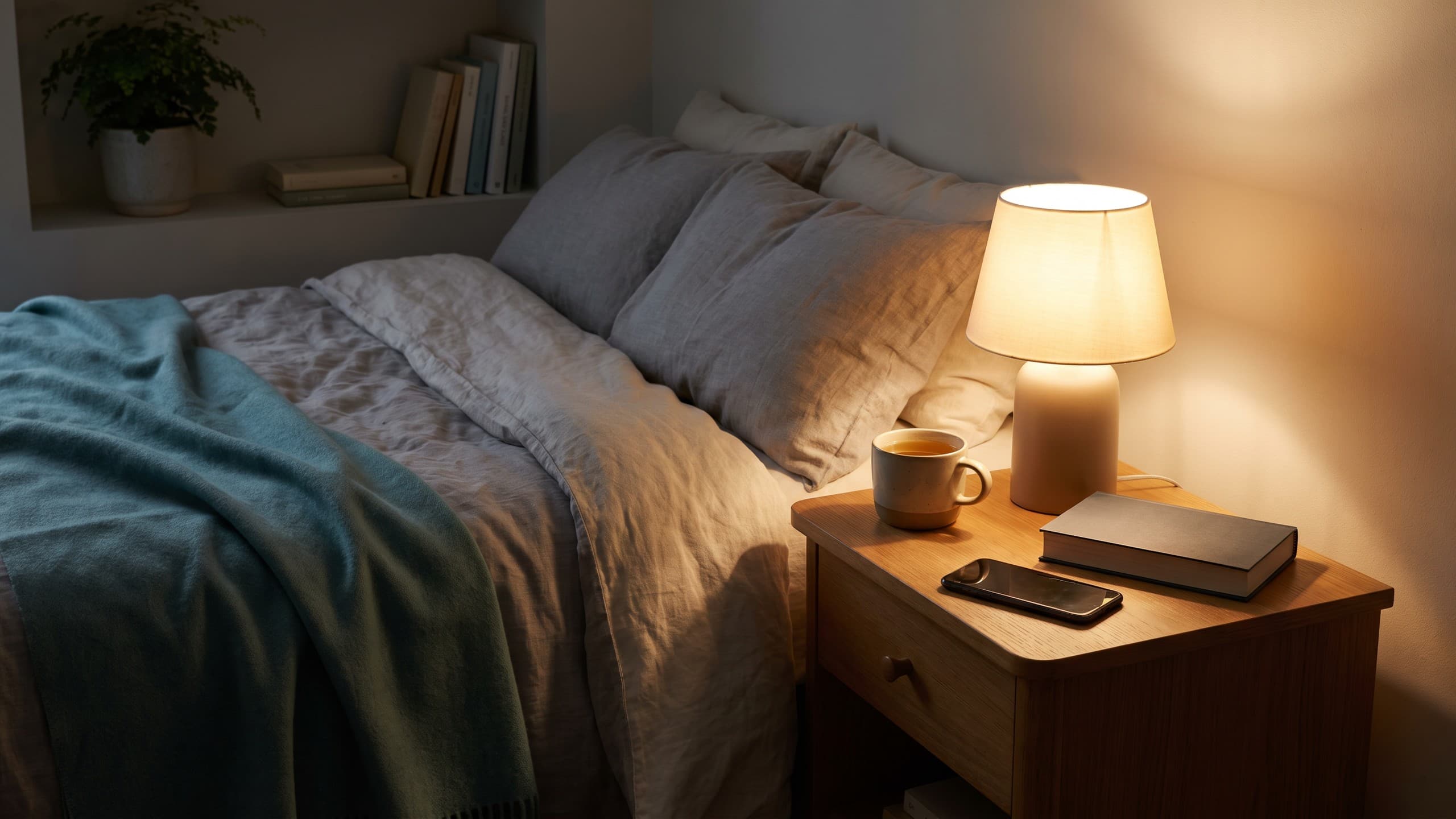
Do you lie awake for hours staring at the ceiling, or wake in the middle of the night and cannot fall asleep again? The causes of insomnia are many: stress, strong tea in the evening, phone screens, pain, and sometimes sleep apnoea or low mood. In this article we look at the most common causes of insomnia and irritability, sleep hygiene rules, what science says about natural calming remedies and when to see a doctor.
What is insomnia and how many hours of sleep do adults need?
Insomnia is trouble falling asleep, waking often in the night, or waking too early and being unable to get back to sleep. What matters is that the effects show during the day: tiredness, irritability, poor concentration. One or two bad nights happen to everyone and are not an illness.
According to the US CDC, adults aged 18 to 60 need at least 7 hours of sleep a night, and those over 65 about 7 to 8 hours. Individual needs differ a little, but if you regularly sleep 5 to 6 hours and feel poorly in the daytime, it deserves attention.
Causes of insomnia: what gets in the way of sleep?
The NHS lists these causes of insomnia:
- stress, anxiety or depression;
- noise, a room that is too hot or cold, an uncomfortable bed;
- alcohol, caffeine, nicotine;
- shift work or jet lag;
- long-term pain, sleep apnoea, restless legs syndrome, an overactive thyroid, the menopause;
- the effects of many medicines.
In everyday life here we can add familiar habits: a late, fatty dinner (such as plov), many cups of strong tea in the evening, and long evenings on the phone and social media. These habits alone can spoil sleep.
Irritability and insomnia: why are they linked?
Insomnia makes you more irritable, and irritability disrupts sleep, so it becomes a vicious circle. After a sleepless night even small things annoy you, tension builds up during the day, thoughts will not stop in the evening and sleep fails again. You can read more about long-lasting tension on the chronic stress page.
Tiredness and insomnia often go together; other possible causes (low iron, thyroid, blood sugar) are covered in the article on the causes of constant tiredness.
Sleep hygiene: what to do to sleep better
The NHS notes that insomnia usually gets better by changing your sleeping habits. Combining CDC and NHS advice:
- A steady routine. Get up at the same time every day, weekends included. Do not lie in after a bad night.
- Go to bed only when sleepy. Wind down for at least an hour: a book, a warm shower, quiet music.
- Caffeine and alcohol. Avoid tea, coffee, nicotine and alcohol for at least 6 hours before bed. Alcohol may seem to help you drop off, but it worsens sleep quality.
- Food and exercise. Skip large late meals; finish exercise about 4 hours before bed, but stay active during the day.
- Screens. Put the phone away and switch off the TV before bed.
- Bedroom. Dark, quiet and cool, with a comfortable mattress and pillow.
- Daytime naps. Avoid long naps.
- Do not lie awake in bed. If you cannot sleep after about half an hour, get up, do something calm in another room and go back when sleepy. Do not watch the clock.
CBT-I: the most reliable approach to insomnia
The NCCIH (US) writes that cognitive behavioural therapy for insomnia (CBT-I) is the option with the strongest evidence. It is a programme with a psychologist or a trained clinician, where together you change the thoughts and habits that stop you sleeping. According to the NHS it can be face to face or an online self-help programme. Its advantages are that the benefit tends to last and no tablets are needed.
Easing daytime tension: simple habits against irritability
Irritability cannot be fixed only at night: it often builds up through the day. For sleep to improve, it helps to manage tension during the daytime too.
- Daily movement. A walk every day and light exercise help ease nervous tension and make it easier to fall asleep in the evening.
- Breathing exercises. A slow deep breath in and an even slower breath out calms you within minutes. You can do it in the evening before bed as well.
- Write your worries down. If you note tomorrow's tasks and concerns in a notebook, they are less likely to circle in your head in bed.
- Switch off from work. Set a clear time after which you do not read work messages.
- Talk to people close to you. Do not keep problems inside; talking to someone you trust brings relief.
These habits do not work overnight. Repeat them consistently for at least a few weeks, and only then does your sleep pattern begin to change.
Herbs and natural remedies: chamomile, valerian, melatonin
Interest in natural calming remedies is high, but we must be honest about the evidence. According to the NCCIH:
- Valerian: results of clinical trials are inconsistent and a benefit for insomnia has not been demonstrated.
- Chamomile: traditionally used, but there is no conclusive clinical evidence that it helps. People allergic to ragweed or related plants may react to it.
- Melatonin: evidence is mixed; it may help with jet lag and shift work, but it is not recommended for chronic insomnia. Long-term safety is not established.
A cup of warm chamomile tea as a calm evening ritual is unlikely to do harm, but it is wrong to see it as the answer to insomnia. Before taking herbs or supplements, especially alongside other medicines, check with a doctor or pharmacist.
Why are sleeping pills available only on prescription?
According to the NHS, doctors rarely prescribe sleeping pills because of serious side effects and the risk of dependence. They are usually given only for very severe insomnia when other approaches have not worked, and for a few days or a few weeks at most. Sleep aids sold over the counter are not harmless either: they can cause drowsiness and are not meant for long use. Do not take a sleeping pill on the advice of an acquaintance or the internet.
When to see a doctor
The NHS advises seeing a doctor if changing your habits has not helped, sleep problems have lasted for months or they affect daily life. Do not wait if:
- insomnia lasts longer than a few weeks and affects work and concentration;
- you snore loudly, stop breathing or choke in your sleep, or have morning headaches (signs of sleep apnoea);
- low mood, loss of interest, constant anxiety or panic attacks last a long time;
- sleep problems are linked to pain, breathlessness or a newly started medicine;
- you risk falling asleep while driving.
If you have thoughts of harming yourself, call an ambulance (103 in Uzbekistan) at once or reach out to someone close. The doctor will find the cause, refer you to a psychologist or sleep specialist if needed, and decide on treatment.
Before the appointment, keep a sleep diary for two weeks: when you went to bed, roughly when you fell asleep, how many times you woke, what you ate and drank in the evening and how you felt during the day. Such notes help the doctor find the cause of insomnia much faster. Also list every medicine and supplement you take, because some of them affect sleep.
How Nutva Inositol can help
Let us be clear first: Nutva Inositol is not a sleep aid or a calming medicine and does not replace therapy for insomnia, anxiety or depression. Research on inositol and mood or anxiety is still limited: the studies are few, results are mixed and not enough for firm conclusions. So we cannot promise that it helps with insomnia or irritability.
Nutva Inositol is a dietary supplement that supports normal nervous system function and cellular processes. One capsule contains myo-inositol (vitamin B8) 1000 mg and 5-methylfolate (vitamin B9) 200 mcg (2 capsules: 2000 mg / 400 mcg). More on inositol: what inositol is.
The product is not a medicine. It does not replace a balanced diet, enough sleep, physical activity or medicines prescribed by a doctor. Permit number: №1594430 (Ministry of Health of Uzbekistan), manufacturer NUTVA PHARM LLC.
Precautions. During pregnancy, breastfeeding or if you take diabetes medicines, take it only after consulting your doctor. The product does not replace PCOS therapy prescribed by a gynaecologist or endocrinologist. Directions for use: follow the leaflet on the pack and your doctor's advice.
Frequently asked questions
What causes insomnia?
Most often stress, poor sleep habits, caffeine and alcohol, pain and mental state (anxiety, low mood). Sleep apnoea and thyroid problems can also disturb sleep. If the cause is unclear, see a doctor.
What should I do if I cannot sleep at night?
If you cannot sleep after about half an hour, get up and do something calm in another room in dim light, such as reading. Go back when you feel sleepy. Watching the clock and scrolling the phone only drives sleep further away.
Do natural calming remedies work?
There is not enough good-quality evidence for valerian and chamomile, and melatonin is not recommended for chronic insomnia. The most reliable approaches are sleep hygiene, breathing and relaxation exercises and CBT-I. Check with a doctor before taking herbs.
Does inositol help you sleep?
There is no reliable evidence for this. The effect of inositol on mood has been studied, but results are limited and mixed. Do not rely on inositol for insomnia; find the cause together with a doctor.
Can I take a sleeping pill for insomnia on my own?
No. Because of the risk of dependence and side effects, sleeping pills are prescribed by a doctor only, for a short time. First the cause has to be found and sleep habits put in order.
This article is for general information. It does not replace a doctor's examination or treatment. Nutva products are not medicines.