
Heart-healthy foods: 15 foods, a comparison table and everyday habits
Which foods are good for the heart and blood vessels, what to limit and how to adapt the Uzbek table — plov, bread, salt and sweet tea.
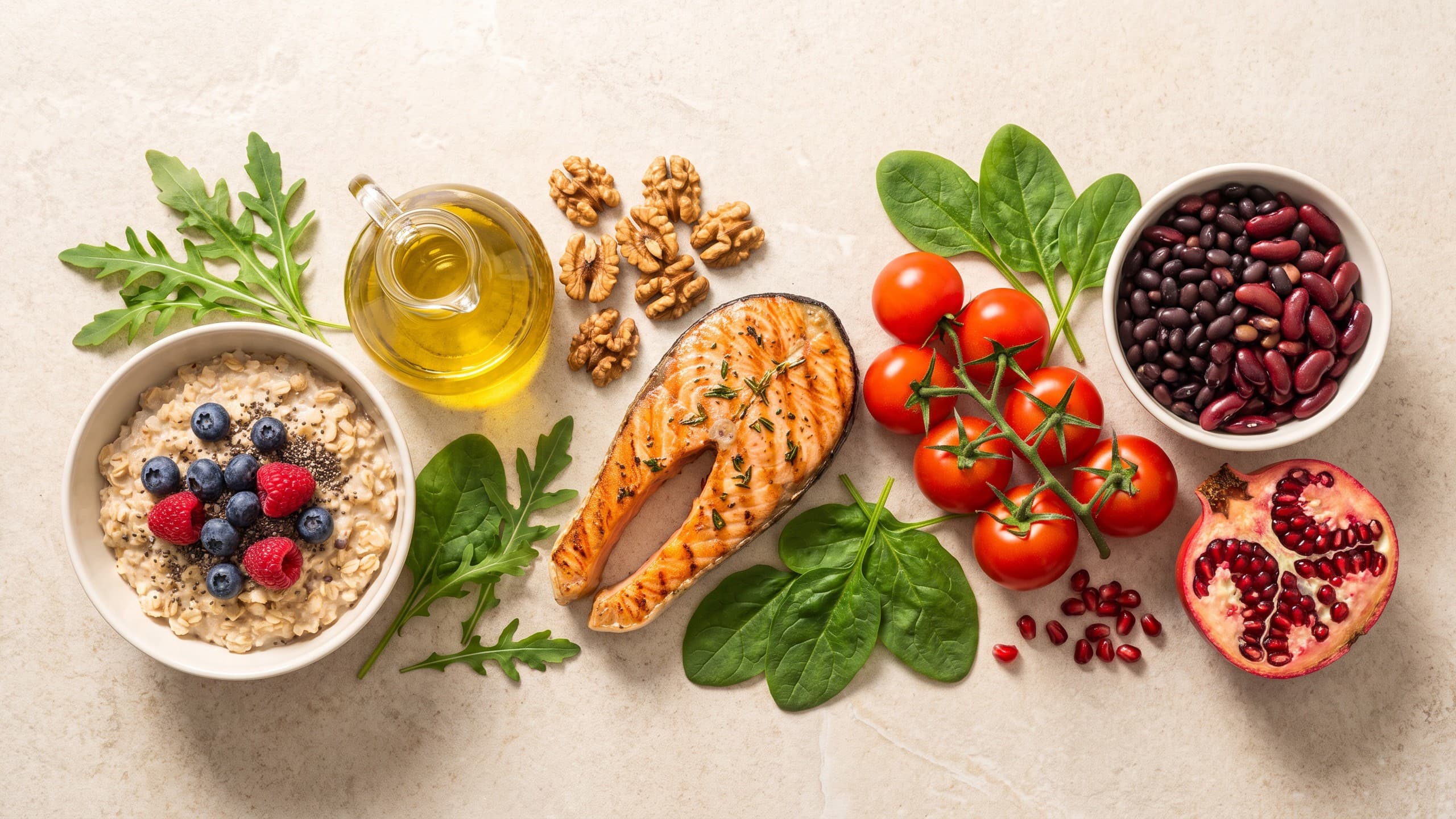
Heart health depends to a large extent on what we put on the table every day. Heart-healthy foods do not have to be expensive or rare: most of them — chickpeas, mung beans, oats, nuts, vegetables and fruit — are sold at any bazaar. In this article we cover 15 foods that are good for the heart and blood vessels, what to limit, how to adapt Uzbek cuisine and which simple habits matter beyond diet.
How does food affect the heart?
Food affects the heart not directly but mainly through blood pressure, blood cholesterol and sugar levels, and weight. Too much salt raises blood pressure, too much saturated and trans fat raises "bad" cholesterol (LDL), and too much sugar and white flour adds weight and raises blood sugar. Over time all of this puts a strain on the walls of the blood vessels.
WHO gives these key benchmarks for a healthy diet:
- at least 400 g of fruit and vegetables a day;
- at least 25 g of naturally occurring dietary fibre a day;
- salt — less than 5 g a day (about one teaspoon);
- free sugars — less than 10% of daily energy;
- saturated fat — no more than 10%, trans fat — no more than 1%.
15 foods that are good for the heart
1. Oily fish
Salmon, mackerel, herring, sardines and trout contain the omega-3 fatty acids EPA and DHA. The NHS recommends at least 2 portions of fish a week, including 1 of oily fish; a portion is about 140 g. Baking or stewing fish is better than frying it.
2. Walnuts and almonds
Nuts contain unsaturated fats, fibre and plant protein; walnuts also contain plant omega-3 (ALA). They are high in calories, so a handful is enough. Choose plain, unroasted nuts rather than salted or sugar-coated ones.
3. Flaxseed and other seeds
Flaxseed is rich in ALA and fibre. You can grind it and add it to yoghurt (qatiq) or porridge. Sunflower and pumpkin seeds are good too — just choose unsalted ones.
4. Pulses: chickpeas, mung beans, beans, lentils
Some of the most valuable foods in Uzbek cuisine. They are high in soluble fibre and protein and contain almost no saturated fat. Mastava, moshkhurda or chickpea soup are easy ways to replace part of the meat with pulses.
5. Oats
Oats are rich in soluble fibre, which is considered part of a diet that is good for cholesterol levels. Unsweetened oat porridge topped with fruit and nuts makes a good breakfast.
6. Whole-grain cereals and bread
Buckwheat, pearl barley, brown rice and whole-grain bran bread provide more fibre than white-flour products. WHO recommends that carbohydrates come mainly from whole grains, vegetables, fruit and pulses.
7. Leafy greens
Spinach, coriander, dill, basil (rayhon), lettuce — low in calories and rich in fibre and potassium. They are easy to add to any dish and add flavour without extra salt.
8. Cabbage, carrots, pumpkin and beetroot
These vegetables are cheap all year round and a good source of fibre. In winter they work well in salads, soups and dimlama.
9. Tomatoes and bell peppers
In summer, achichuk salad is on every table — a good habit. Just go easy on the salt.
10. Fruit: apples, quince, pomegranate, apricots
Whole fruit gives you fibre, while juice has little fibre and more sugar. So eating the fruit itself is better than drinking juice.
11. Berries and grapes (in season)
Strawberries, raspberries, mulberries and grapes are a healthy summer sweet. In winter, frozen berries can be added to porridge or yoghurt. Dried fruit is sweet and high in calories, so eat it in small amounts.
12. Olive and other vegetable oils
Olive, sunflower and rapeseed oils are unsaturated fats. According to the NHS, replacing saturated fat with unsaturated fat helps lower cholesterol. But any oil is high in calories — measure it.
13. Qatiq, suzma and low-fat dairy
Choosing qatiq and low-fat suzma instead of cream (qaymoq) and fatty cheese reduces saturated fat. Ready-made sweet yoghurts can contain a lot of sugar — read the label.
14. Skinless poultry and lean meat
You do not have to give up meat: skinless chicken or turkey, or beef with the fat trimmed, is a better choice. Eat sausages, frankfurters and smoked meats less often — they are high in both salt and fat.
15. Water and unsweetened tea
Water and unsweetened green or black tea are the simplest drinks. Sugary fizzy drinks and tea with sugar, on the other hand, are among the main sources of excess sugar.
What to limit for the heart: comparison table
| Good choice | Limit |
|---|---|
| Oily fish, skinless poultry, pulses | Tail fat (dumba), fatty mutton, sausages, smoked meats |
| Olive, sunflower, rapeseed oil (measured) | Frying in lots of cottonseed oil or tail fat, margarine, confectionery fats |
| Whole-grain bread, buckwheat, oats, barley | Lots of white non and patir, samsa, chuchvara and fried dough |
| Fresh vegetables and herbs | Pickled cucumbers and tomatoes, salty tinned food |
| Whole fruit, berries | Juice, sugary fizzy drinks, cakes, biscuits |
| Unsalted nuts and seeds | Salted pistachios, crisps, salty qurt |
| Water, unsweetened tea | Tea with sugar, alcohol |
The Uzbek table: plov, bread, salt and sweet tea
You do not have to give up national dishes — changing how they are cooked and how much you eat is enough.
- Plov. Use less oil, choose meat without tail fat or lean meat, and add more carrots. Eat plov once or twice a week with a large bowl of achichuk or green salad.
- Bread. Non is always on the table and is often eaten in large amounts without noticing. One or two pieces per meal are enough; where possible choose bran or whole-grain bread.
- Salt. According to WHO, adults worldwide eat about 11 g of salt a day on average — more than twice the recommended 5 g. Most salt comes from bread, pickles, tinned food, sausages and ready-made seasonings. Do not add salt before tasting, and use herbs, garlic, cumin and pepper for flavour.
- Sweet tea. Several bowls of sweet tea a day with sweets and novvot add up to a noticeable amount of free sugar. Cut sugar down gradually — your taste adapts in one or two weeks.
- Holidays and weddings. Everyday habits matter more than one generous feast. Make the days after a wedding lighter.
Cholesterol tests and ways to improve the result without medication are covered in our article on lowering cholesterol without medication.
Beyond food: simple habits for the heart
- Activity. WHO recommends that adults get at least 150 minutes of moderate-intensity physical activity a week — for example, brisk walking for 30 minutes on 5 days a week.
- Not smoking. Quitting smoking is one of the most beneficial steps for the heart and blood vessels. Nasvay and e-cigarettes are not a safe alternative.
- Checking blood pressure. According to the NHS, high blood pressure usually has no symptoms. People aged 40 or over who have not had their blood pressure checked for more than 5 years are advised to get it checked. A reading of 140/90 or above taken by a health professional, or 135/85 or above at home, is generally considered high.
- Weight. Gradually losing excess weight around the waist has a positive effect on blood pressure and blood sugar.
- Limiting alcohol and getting enough sleep.
- Tests. Check your cholesterol and blood sugar as often as your doctor advises.
When to see a doctor
Call an ambulance on 103 straight away if you notice:
- squeezing or pressing chest pain, especially if it spreads to the arm, neck or jaw;
- severe shortness of breath;
- pale or bluish lips or skin, cold sweat, or nausea together with chest discomfort;
- a drooping face, sudden weakness in an arm or leg, or slurred speech;
- loss of consciousness.
Book a routine appointment with a doctor if:
- your home blood pressure readings are above 135/85 several times;
- you feel chest discomfort, breathlessness or a racing heart during exertion;
- your legs swell or tiredness gets worse;
- close relatives had a heart attack or stroke at a young age;
- you have diabetes, high cholesterol or kidney disease.
Do not replace medicines your doctor prescribed with food or supplements, and do not stop them on your own. Read about plaque building up in the arteries in our atherosclerosis guide.
How Nutva Omega-3 can help
Eating fish twice a week is not convenient for everyone. In that case an omega-3 supplement can add to your diet, but it does not replace it. Nutva Omega-3 is a dietary supplement (BAA) made by NUTVA PHARM MChJ (Uzbekistan). One capsule contains 992 mg of omega-3 fatty acid concentrate in rTG (re-esterified triglyceride) form, including EPA 450 mg and DHA 300 mg; mixed tocopherols 10 mg and ascorbyl palmitate 4 mg are added as antioxidants. The pack holds 60 capsules.
As a source of EPA and DHA, the product supports the normal function of the heart and blood vessels, and also supports the normal function of the brain and nervous system, vision and cell membranes.
- Permit number: №1578936 (Ministry of Health of Uzbekistan).
- The product is not a medicine.
- If you take blood thinners or have surgery planned — consult a doctor first. It does not replace prescribed medicines.
- How to take it — follow the instructions on the pack and your doctor's advice.
A supplement does not replace a balanced diet, sleep, activity or medicines prescribed by your doctor. Read more in our guide to omega-3 benefits, and about fish oil versus concentrates in fish oil vs omega-3.
Frequently asked questions
Which fruit is best for the heart?
There is no single "best" fruit. What matters is eating fruit and vegetables of different colours every day — at least 400 g in total — and choosing whole fruit rather than juice.
Are nuts good for the heart and how many can I eat a day?
Nuts are a source of unsaturated fats and fibre, so they are part of a heart-healthy diet. They are high in calories, so around a handful a day, unsalted and unroasted, is usually sensible.
Is plov bad for the heart?
It is not plov itself but the amount of oil and the portion size that matter. With less oil, lean meat, more carrots and a salad on the side, it can be eaten once or twice a week.
How much salt a day is OK for the heart?
WHO recommends that adults have less than 5 g of salt a day — less than a teaspoon. This includes salt from bread, pickles and ready-made foods.
Can omega-3 replace heart medicines?
No. An omega-3 supplement is not a medicine and does not replace medicines prescribed by a doctor. If you take blood thinners, talk to a doctor before starting it.
Which tea is good for the heart?
Unsweetened green or black tea is fine as an everyday drink. The main issue is the sugar added to tea and the sweets eaten with it; cutting these down does more for the heart.
This article is for general information. It does not replace a doctor's examination or treatment. Nutva products are not medicines.